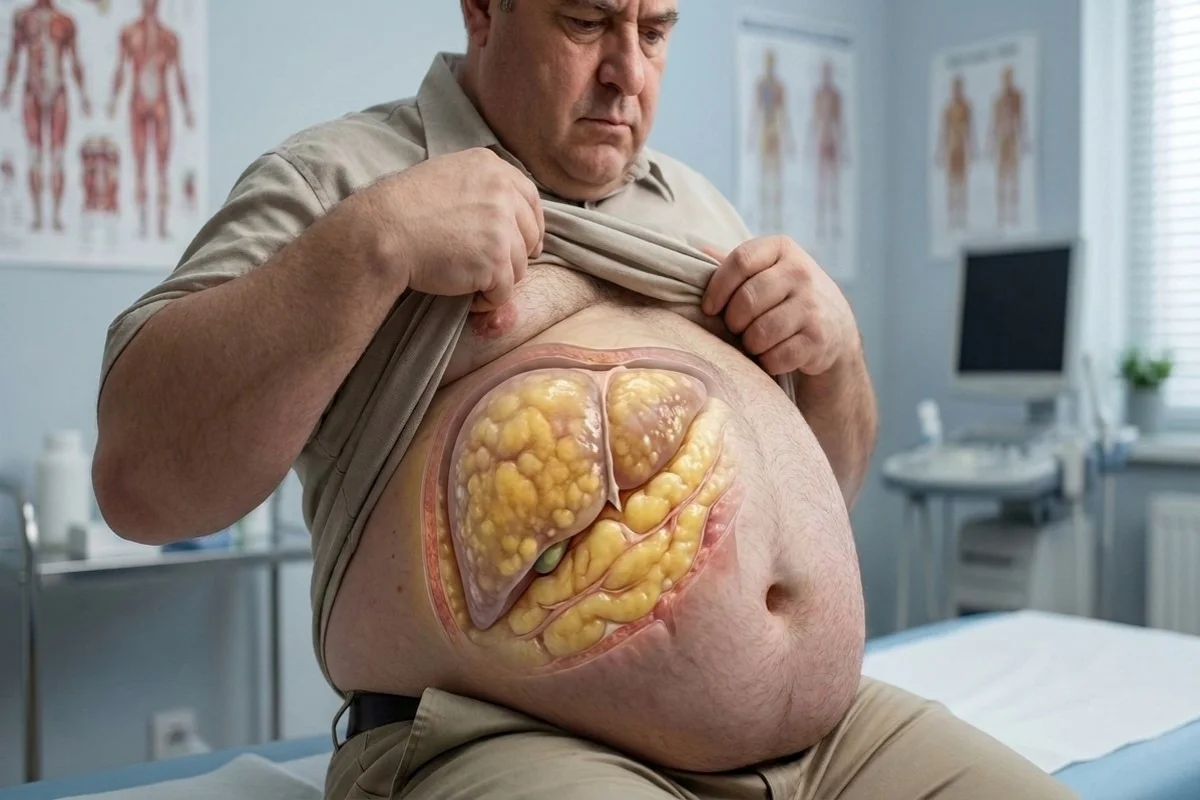
Here’s something weird about fatty liver you can have it and feel completely normal. No pain, no red flag, nothing. The fat just builds up quietly while you’re living your life like nothing’s going on. Most people I’ve read about find out totally by accident. Blood work gets ordered for something unrelated, or a scan flags it while someone’s looking for a different problem, and boom, now there’s a diagnosis sitting in front of you that you never saw coming.
Yeah, that’s unsettling. Nobody wants a surprise liver diagnosis. But don’t jump straight to worst-case thinking. This isn’t automatically “your liver is ruined.” Think of it more like a warning light on your dashboard than a car that’s already broken down.
And skip the detox teas, the cleanses, whatever miracle product someone’s selling on Instagram. None of that fixes this. What actually moves the needle is honestly kind of boring eat decently, move your body, sleep enough, and let an actual doctor guide the rest instead of some wellness influencer.
What This Actually Is
Simple version your liver ends up storing more fat than it’s supposed to. That part’s easy. Where it gets murkier is that this isn’t one fixed condition it’s a range. Some people just have the extra fat and nothing else happening. Other people get inflammation on top of it, and if that sticks around, it can turn into scarring (fibrosis is the technical word). Worst case, that scarring becomes cirrhosis.
You might see the term MASLD floating around metabolic dysfunction-associated steatotic liver disease. Long name, but it’s just referring to the version tied to metabolic issues, things like insulin resistance and blood sugar problems.
The thing worth remembering a fatty liver diagnosis on its own isn’t the whole story. What actually matters is why your liver’s holding onto that extra fat, and whether inflammation or damage is happening alongside it.
Does It Even Feel Like Anything?
Mostly, no. That’s the annoying part. You could be walking around with liver fat and have literally zero clue.
When people do notice something, it’s usually vague tired more than usual, low energy, maybe a dull ache under the ribs on the right side. None of that screams “liver problem” though, so you really can’t diagnose yourself based on symptoms. Doesn’t work that way.
When Things Start Getting More Serious
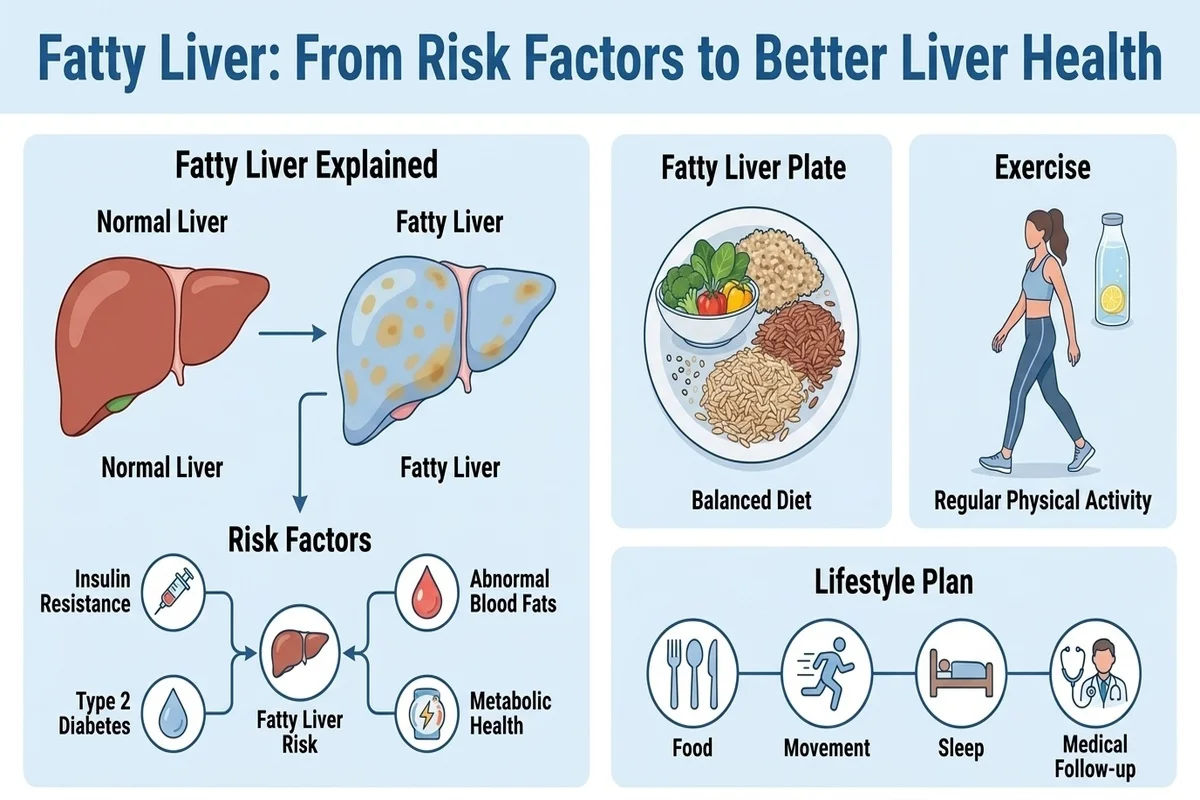
Early fatty liver tends to be quiet. But if it progresses further, the warning signs get a lot harder to miss:
Skin or eyes turning yellowish. A belly that looks swollen or feels off. Urine that’s suddenly darker than normal. Itching that won’t let up no matter what you do.
If any of that’s happening, don’t wait around hoping it resolves itself. Go see someone symptoms of advanced liver disease
What’s Behind It
Almost never just one cause. Usually a few things are piling on top of each other at once.
Insulin resistance and type 2 diabetes come up a lot here. When your body’s not handling blood sugar and fat properly, the liver kind of takes the hit badly. Getting your metabolic health in order tends to help directly with this.
Extra weight matters too, though maybe not how you’d expect. Sure, being overweight raises the risk. But plenty of thin people get fatty liver as well, especially when other metabolic stuff is working against them behind the scenes. Your overall metabolic health honestly tells you more than what the scale says.
Then there’s cholesterol and triglycerides when those numbers are off, fatty liver tends to show up right alongside them. Metabolic syndrome is basically several of these risk factors teaming up: extra weight around your middle, high blood pressure, elevated blood sugar, high triglycerides, low “good” cholesterol. Stack a few of those together and your risk climbs pretty fast.
Sugar deserves its own callout, especially the drinkable kind. Sodas and sweetened beverages in large amounts are a well-documented contributor. Fructose from actual fruit isn’t really the villain here it’s the stuff loaded into sweetened drinks that causes trouble.
And sometimes it’s simpler than all this just alcohol, or a medication doing something unexpected, or a totally different liver condition. That’s why your doctor’s going to ask about drinking habits, current meds, and your history. They’re trying to rule things in or out, not just guessing.
Why Does the Liver Even Do This?
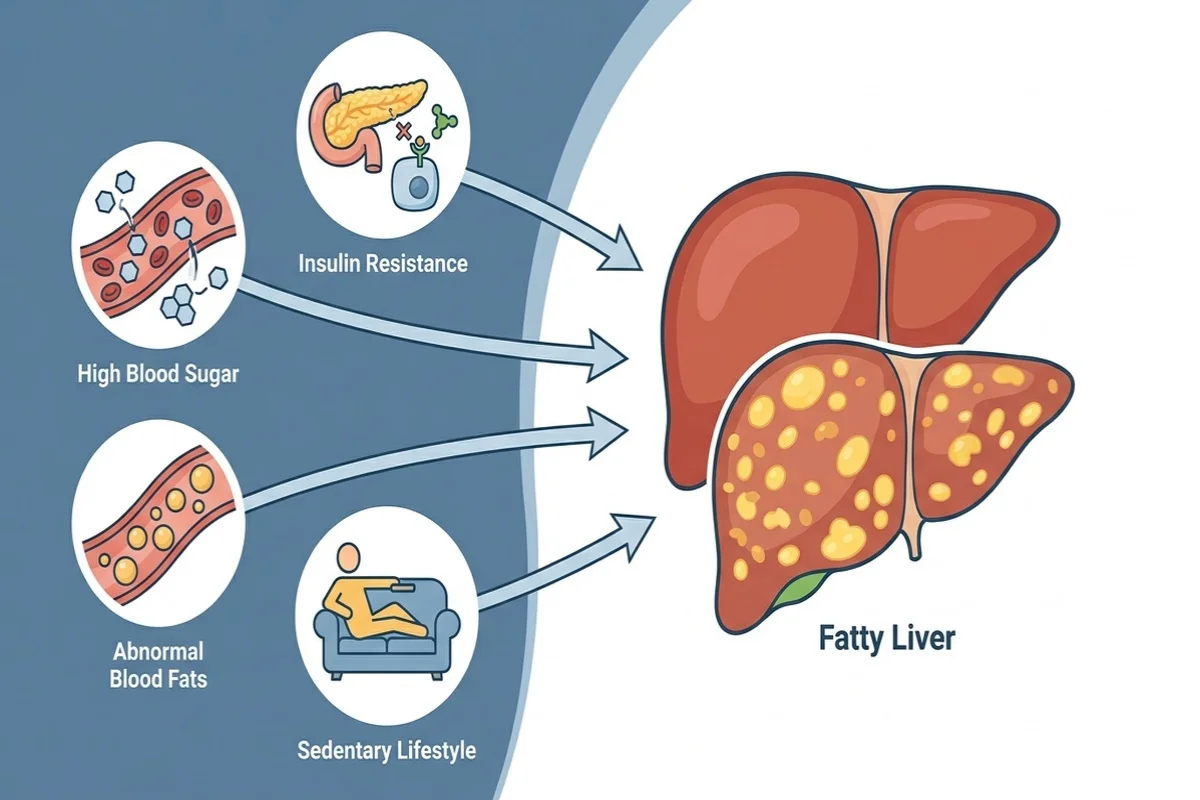
Your liver’s kind of the quiet workhorse of your body processing nutrients, managing energy, doing a ton of stuff nobody thinks about until it stops working right. When your metabolism gets thrown off, the liver starts hoarding fat it really shouldn’t be hoarding.
For some people it stops there and nothing further happens. For others, that stored fat sets off inflammation, and inflammation left alone long enough can cause scarring. A smaller group of people see that scarring go all the way to cirrhosis.
Which is basically why “detoxing” isn’t really the right way to think about any of this. You’re not flushing anything out you’re fixing whatever’s causing the fat buildup in the first place and protecting the liver from there on.
How Doctors Actually Figure This Out
You genuinely can’t tell from symptoms again, plenty of people feel totally fine and still have it. Doctors usually stitch together a picture using your medical history, a physical exam, bloodwork (liver enzymes especially), metabolic markers, imaging like an ultrasound, and sometimes elastography or similar tests to check for scarring. If something looks off, they might order more testing from there.
They’ll also probably ask about alcohol, medications, and other health conditions, since all of that helps narrow down what’s actually causing the problem.
What You Can Actually Do
If you’ve got this diagnosis, aim for steady change you can keep up with not some intense 30-day reset that burns out by week two. There’s no single fix, but a handful of habits genuinely help.
Move your body regularly. Both cardio and strength work reduce liver fat. If you’re not doing much right now, you don’t need to start intense walking counts, and you build from there.
Cut down on sitting for long stretches. This is separate from formal exercise. Taking stairs, stretching every so often, just getting up periodically it adds up more than people expect.
Take sleep seriously. It’s not a cure, but it’s part of the bigger metabolic picture, so it’s worth protecting rather than sacrificing.
Deal with stress in whatever way actually works for you walking, breathing exercises, time outside, a hobby, talking to people you trust. The “best” method is just whichever one you’ll actually stick with long term.
Be skeptical of anything marketed as a liver detox or cleanse. You don’t need a special tea, and some of these products genuinely mess with medications or cause harm on their own. If a supplement catches your eye, ask a healthcare professional before you buy it, not after.
What About Food?
Same deal no miracle ingredient exists. What matters is your overall pattern over time, and a Mediterranean-style way of eating is a decent reference point to work from.
Lean toward vegetables, whole fruit, beans and lentils, whole grains, nuts, seeds, fish, decent protein sources, and foods with unsaturated fats.
Cut back where you can on sugary sodas, sweetened drinks, heavily processed food, added sugar, saturated and trans fats, oversized portions, and meals that are mostly refined carbs.
Nothing extreme needed here. A pattern you can actually maintain beats a strict plan you’ll quit on in three weeks every time.
Exercise and Yoga
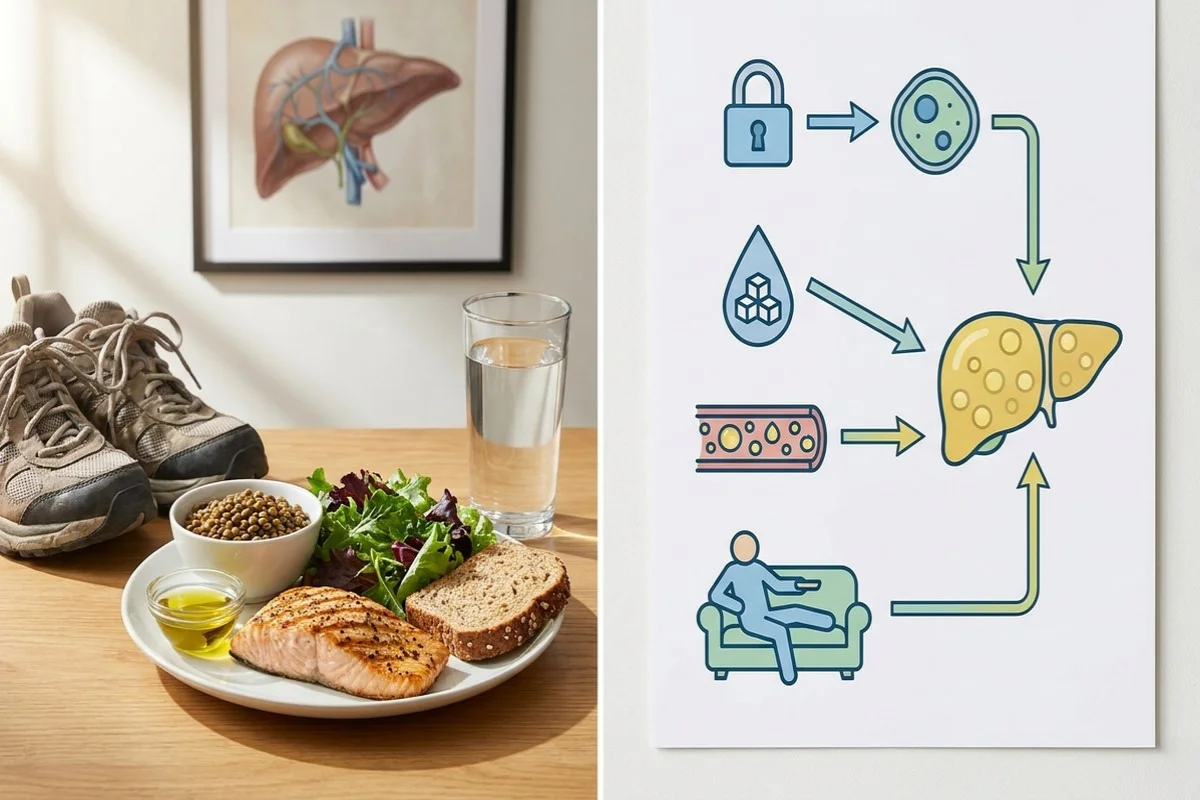
Exercise genuinely helps, no asterisk needed. Both cardio and resistance training reduce liver fat and improve metabolic health overall. Starting from zero? Brisk walking, cycling, swimming, dancing, resistance bands, bodyweight moves, basic strength training all reasonable entry points. Got health limitations or haven’t worked out in years? Talk to a doctor before diving in headfirst.
Yoga’s fine in its own lane too. Helps with flexibility, relaxation, managing stress. But no pose out there is reversing fatty liver by itself it’s a supporting habit, not a treatment plan.
When Should You Actually See a Doctor?
No need to panic over a fatty liver diagnosis, but don’t brush it off either. Get in touch with a healthcare professional if your liver tests come back abnormal, imaging already flagged liver fat, you have diabetes or other metabolic risk factors, you’re dealing with ongoing symptoms, you’re just genuinely worried about it, you’re on medications that could affect your liver, or you’ve got a history of liver disease.
And if you notice yellowing skin or eyes, or real abdominal swelling don’t sit on that one. Get it looked at, since those can point toward more advanced liver disease.
Frequently Asked Questions
Q1: Can it actually get better? For most people?
Yes. Lifestyle changes reduce liver fat, and losing weight helps if you’re carrying extra. How much you improve depends on the person and whether inflammation or scarring already set in.
Q2: Is there one “best” diet?
Not exactly but a pattern heavy on vegetables, whole foods, fiber, and healthy fats, while going easy on added sugar, keeps showing up as the common thread.
Q3: Do sugary drinks actually matter that much?
Yes, especially in large quantities over time. Cutting back on them is one of the more doable changes most people can realistically make.
Q4: Can you have this without being overweight?
Absolutely. Genetics and metabolic factors play their own role here, so body size alone doesn’t tell you the full picture.
Q5: Can it turn into something serious?
For some people, yes it can progress toward inflammation, scarring, or cirrhosis. Not guaranteed, but that’s exactly why catching it early and getting proper care actually matters.
Final Thoughts
Getting told you have fatty liver can feel jarring, especially when you feel totally fine otherwise. But it’s not an automatic sentence of serious, permanent damage. It’s more of a nudge a reason to take a closer look at your overall health before things get harder to reverse.
There’s no shortcut here. No food, drink, supplement, or yoga pose fixes this by itself. What actually works is the unglamorous stuff eating reasonably well, staying active, protecting your sleep, managing stress, and following up with an actual doctor instead of guessing.
Just pick one thing you can realistically keep doing. Start there. Everything else builds on top of that over time.
Please Read More Informative Articles Visit This Site: Itz Magazine
