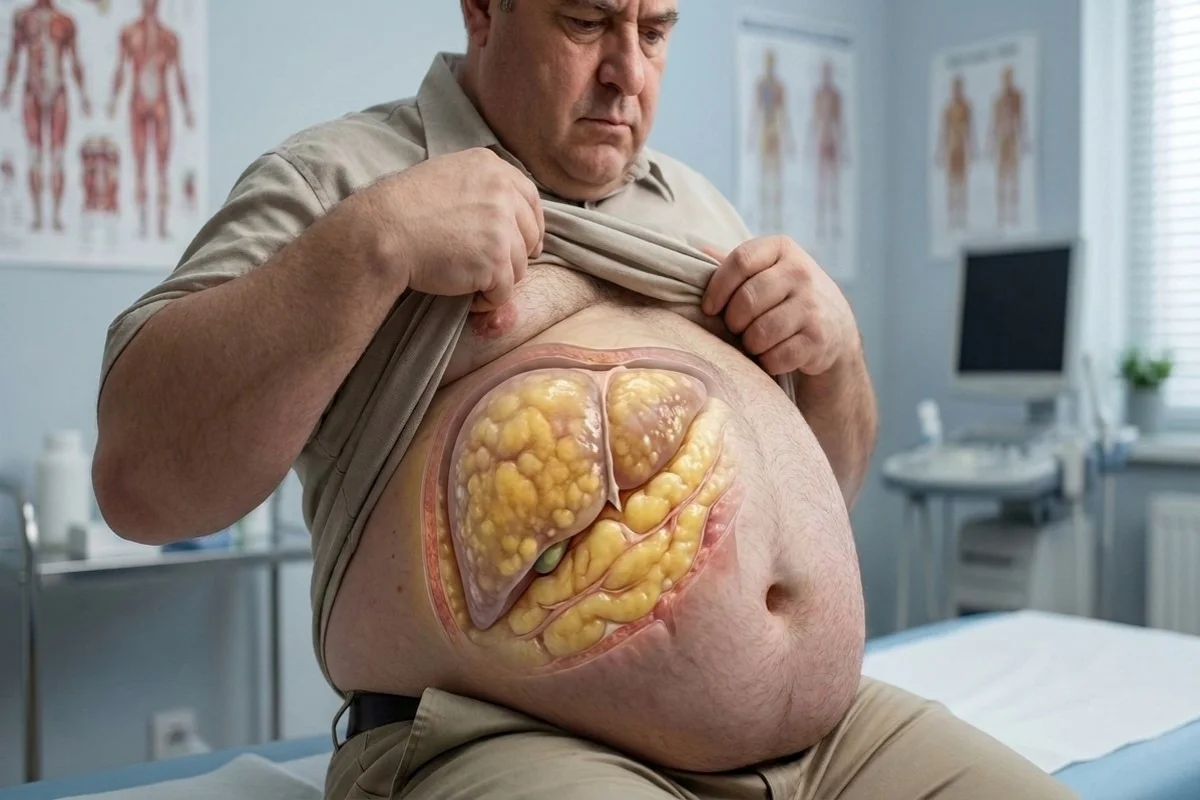
Your liver never really clocks out. It’s working around the clock filtering toxins, processing everything you eat and drink, aiding digestion, regulating blood sugar and energy, and quietly managing hundreds of other biochemical jobs most of us never think about until something goes wrong. And something does go wrong for a lot of people: research from hepatology studies suggests non-alcoholic fatty liver disease (NAFLD) now affects roughly 1 in 4 adults worldwide, making it one of the most common chronic liver conditions on the planet. The World Health Organization estimates liver disease contributes to over 2 million deaths globally each year, a number that’s climbed steadily alongside rising rates of obesity, poor diet, and alcohol use.
Here’s the honest, expert-backed truth though what you eat and drink daily does shape the metabolic environment your liver operates in diets high in added sugar, refined carbs, and excess alcohol are consistently linked to fat accumulation and inflammation in liver tissue. But there’s no such thing as a magic “liver detox” tea, juice cleanse, or supplement that flushes the organ clean overnight. Your liver already detoxifies itself, every single day that’s literally its job. The real, evidence-based path to liver health isn’t a fad diet; it’s consistent habits: balanced nutrition, limited alcohol, regular movement, and routine checkups with a healthcare provider who can actually monitor your liver enzymes and function over time.
What Actually Makes a Diet Liver-Friendly?
Before getting into specific eating patterns, it helps to know what Liver-friendly diets tend to have in common.
A liver-supportive way of eating usually leans on vegetables and fruit, whole grains and other high-fiber foods, beans and lentils, nuts and seeds, fish and other lean proteins, unsaturated fats, food that isn’t heavily processed, and mostly water or unsweetened drinks. It tends to go easy on sugary drinks, added sugar, refined carbohydrates, saturated fat, trans fat, and ultra-processed food. In practice, that means swapping saturated and trans fats for unsaturated ones, favoring lower-glycemic foods like vegetables, fruit, and whole grains, and steering clear of large amounts of simple sugar, especially the fructose found in sweetened drinks.
10 Liver-friendly diets
1. Mediterranean Diet
Source: itzmagazine.comThis is probably the best-known pattern for supporting metabolic and liver health, and for good reason. It centers on vegetables, fruit, whole grains, beans and lentils, nuts and seeds, olive oil, and fish, with red and processed meat pushed to the sidelines rather than banned outright. Clinical guidance for MASLD specifically highlights vegetables, fruit, nuts, legumes, seafood or plant protein, whole grains, and fewer refined carbs and manufactured fructose-heavy foods, and research has linked this style of eating to lower liver fat and better metabolic markers overall. A simple day might look like oats with fruit and nuts for breakfast, a lentil salad with whole grain bread for lunch, grilled fish with vegetables and brown rice for dinner, and fruit or a handful of nuts to snack on.
2. DASH Diet
Originally built to help manage blood pressure, DASH still earns a spot here because liver health doesn’t exist in a vacuum. Blood pressure, blood sugar, cholesterol, and liver disease risk are all tangled up together, so a diet built around vegetables, fruit, whole grains, beans, nuts, seeds, and lean protein, with less sodium and saturated fat, tends to help the liver indirectly by supporting everything around it. It’s a solid fit for anyone who wants a structured, well-tested framework rather than a looser set of principles.
3. Whole-Food Plant-Forward Diet
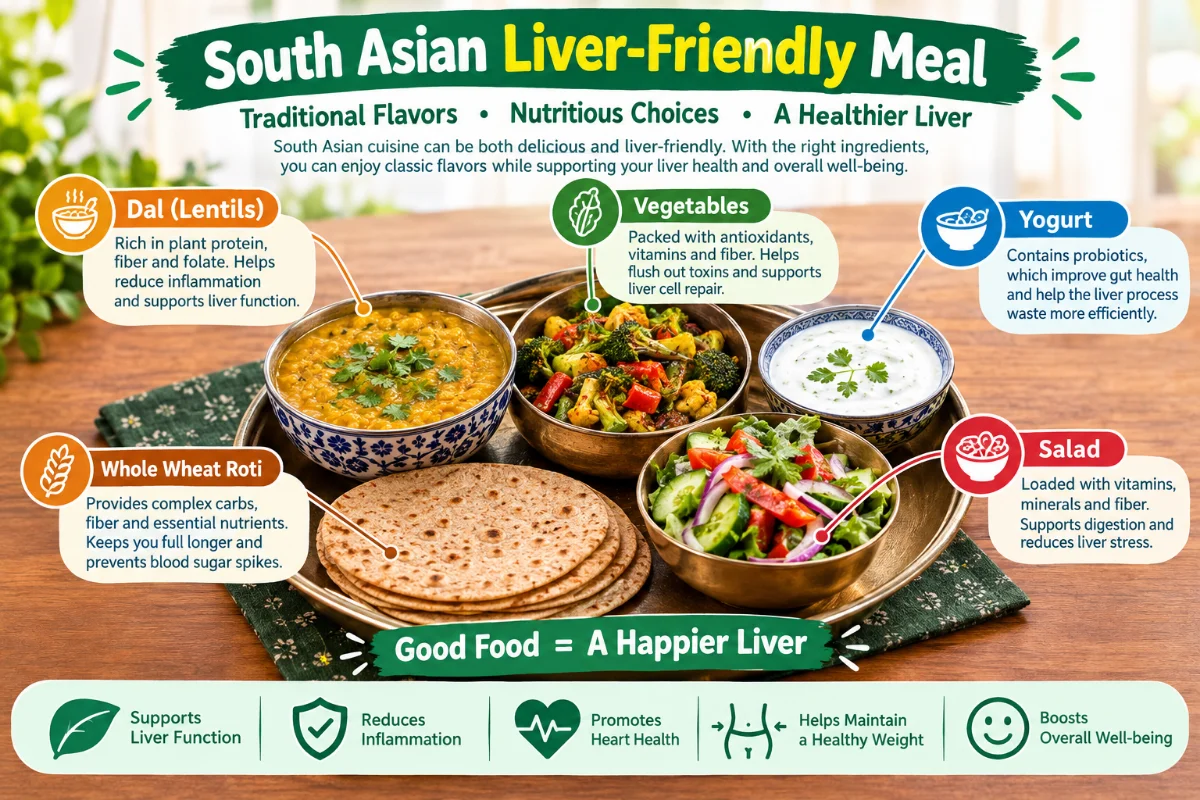
This one doesn’t require going vegetarian or vegan. It just means plant foods do most of the heavy lifting at each meal: vegetables, fruit, beans, lentils, chickpeas, whole grains, nuts, and seeds, with animal foods included if and when you want them. Plants bring fiber and a wide range of nutrients that matter for the gut-liver connection, and the British Liver Trust specifically calls out fruit, vegetables, seeds, nuts, and whole grains as key fiber sources for liver health. In practice, this might mean a lentil curry with vegetables, brown rice, and yogurt, or a chickpea salad with whole grain bread, instead of building the meal around meat.
4. Vegetarian Diet
A well-planned vegetarian pattern can absolutely support liver health, drawing protein from beans, lentils, chickpeas, tofu, eggs, dairy where it fits, nuts, and seeds, plus whole grains and vegetables for fiber. But the label alone doesn’t guarantee anything. A vegetarian diet built mostly on refined carbs, fried food, sugary drinks, and packaged snacks won’t offer the same benefits as one built on whole foods. The quality of what’s on the plate matters more than what you call the diet.
5. High-Fiber Whole-Food Diet
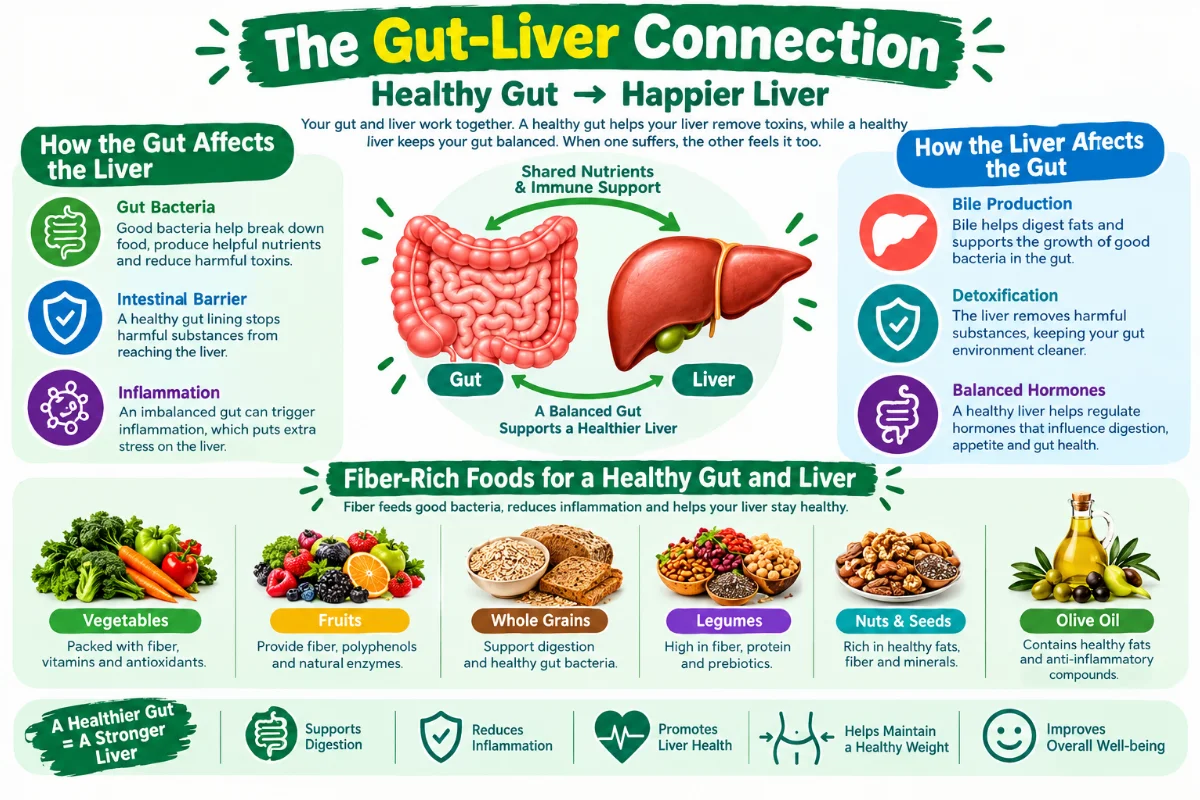
Rather than following a named diet at all, some people do better by focusing on fiber directly: oats, barley, beans, lentils, chickpeas, vegetables, fruit, whole grains, nuts, and seeds. Fiber matters for digestion, and the gut and liver are closely connected biologically, which is part of why the British Liver Trust recommends a steady variety of fiber-rich foods. A useful mental shortcut here is to stop asking, “What’s the single best liver food?” and start asking, “How do I add more whole, fiber-rich food to this meal?” That question tends to lead somewhere more useful.
6. Portfolio-Style Eating Pattern
The Portfolio diet was originally designed around lowering cholesterol, built on oats and barley, nuts, beans and legumes, soy foods, vegetables and fruit, and other sources of soluble fiber. It’s relevant here because cholesterol and metabolic health are part of the bigger picture for anyone at risk of MASLD. It’s not a targeted liver treatment, but it’s a good example of a pattern that tackles several cardiovascular and metabolic risk factors at once.
7. Traditional Asian-Style Whole-Food Diet
Many traditional Asian cuisines already contain a lot of liver-friendly building blocks: vegetables, soy foods, fish, lentils and beans, rice, whole grains, fermented foods, and plenty of herbs and spices. What matters most is preparation and balance. A meal built around vegetables, lentils, fish, and a reasonable portion of rice looks nothing like one built around deep-fried food and sugary drinks, even if both technically fall under the same cuisine. A liver-friendly version of a familiar South Asian meal might be to deal with mixed vegetables, whole grain roti, plain yogurt, and a side salad, keeping the traditional flavors intact rather than replacing them with something unfamiliar.
8. Traditional African and Middle Eastern Plant-Rich Eating
Many cuisines across these regions already lean heavily on lentils, chickpeas, beans, vegetables, whole grains, herbs, olive oil, nuts, seeds, and fish. A bowl of lentil soup with salad and whole grain bread is a genuinely nutrient-dense meal, and the broader point holds here too: you don’t need to eat “Western health foods” to eat well. Healthy eating adapts to local ingredients, tradition, budget, and whatever your family actually eats on a Tuesday night.
9. Flexitarian Diet
This is a plant-forward approach that still leaves room for animal foods: vegetables at most meals, beans and lentils regularly, whole grains, nuts and seeds, fish or poultry when you feel like it, and smaller, less frequent portions of red or processed meat. For a lot of families, a total cuisine overhaul just isn’t realistic. Flexitarian eating focuses instead on adding more good foods while gradually easing off heavily processed ones, which tends to be more sustainable than an all-or-nothing diet that fizzles out after a few weeks.
10. Low-Glycemic, Whole-Food Eating Pattern
This approach favors carbohydrate sources that raise blood sugar more slowly: beans, lentils, non-starchy vegetables, whole grains, and most whole fruit. Guidance for people with fatty liver disease specifically recommends more low-glycemic foods, especially fruit, vegetables, and whole grains, while cautioning against large amounts of simple sugar. None of this means cutting carbs entirely. Whole grains, beans, and fruit still bring real nutrients and fiber to the table.
For general liver and metabolic health, Mediterranean-style eating remains the strongest evidence-based choice, particularly for MASLD, though nobody needs to follow it perfectly.
How the 10 Diets Compare
| Eating pattern | Best known for | Liver-health relevance |
| Mediterranean | Whole foods, unsaturated fats | Strongest evidence for MASLD |
| DASH | Blood pressure control | Supports the metabolic factors tied to liver risk |
| Whole-food plant-forward | Vegetables, legumes, whole foods | Broad, flexible foundation |
| Vegetarian | Plant-based variety | Helpful when built on whole foods, not processed ones |
| High-fiber | Digestive and gut health | Supports the gut-liver connection |
| Portfolio-style | Cholesterol management | Useful for cardiometabolic risk |
| Traditional Asian-style | Vegetables, legumes, fish | Excellent when minimally processed |
| Traditional African/Middle Eastern | Legumes, whole grains | Culturally adaptable whole-food base |
| Flexitarian | Plant-forward with flexibility | Practical and sustainable for families |
| Low-glycemic whole-food | Blood sugar management | Directly relevant to MASLD risk factors |
Specific Foods Worth Knowing by Name
A few specific foods come up so consistently in Liver-friendly diets that they’re worth naming rather than folding into vague categories. Coffee is probably the most talked about. Regular coffee drinkers tend to show lower rates of abnormal liver enzymes in observational studies, and some liver clinics actively encourage a daily coffee habit for MASLD patients rather than telling them to cut it out. Green tea and black coffee both contain polyphenols, plant compounds with antioxidant and anti-inflammatory properties linked to lower liver fat. Walnuts bring polyphenols too, along with vitamin E and omega-3 fats. Cruciferous vegetables like broccoli, cabbage, and cauliflower show up often in clinical nutrition resources as a fiber and antioxidant boost that goes beyond generic vegetable advice. Garlic, turmeric, and beetroot get a lot of attention online too, but the evidence behind them is thinner than what backs coffee, olive oil, or fatty fish.
Foods to Reach for More Often
Instead of building a long list of forbidden foods, it’s usually more useful to think about what you can add. For vegetables, a rotating mix of leafy greens, carrots, tomatoes, peppers, broccoli, cauliflower, cucumber, eggplant, and squash covers a lot of ground. For fruit, apples, oranges, berries, bananas, guava, melon, and pears all count, and whole fruit is a very different thing from fruit-flavored drinks or heavy added sugar. Whole grains like oats, barley, brown rice, whole wheat bread, and whole grain roti are worth prioritizing over their refined counterparts. Legumes such as lentils, chickpeas, kidney beans, black beans, and peas are cheap, filling, and genuinely good for the liver. And for fat, nuts, seeds, olive oil, avocado, and fatty fish supply the unsaturated fats a liver-friendly diet relies on.
Foods and Drinks Worth Limiting
A liver-friendly diet pattern is about cutting back, not obsessively banning anything. The main targets are foods and drinks loaded with added sugar, saturated fat, or refined carbohydrate.
That means going easy on sugary drinks like soda, sweetened tea, energy drinks, and sweetened fruit juice. It means limiting refined foods like white bread, white rice, refined pasta, packaged snacks and chips, pastries and cakes, and sugary breakfast cereal. It means watching saturated fat from fatty cuts of red meat, large amounts of butter or full-fat cheese, and processed meats like hot dogs and sausage. And it means cutting back on heavily processed meals such as frozen dinners and pizzas, canned food loaded with salt or sugar, and fast food.
What About Alcohol and Liver Health
Alcohol deserves its own mention because it can directly cause alcohol-associated liver disease. What’s appropriate depends entirely on your specific diagnosis and how advanced it is, and people with significant liver disease are often advised to avoid alcohol completely. If you’ve been diagnosed with a liver condition, ask your doctor what’s actually appropriate for you rather than assuming any particular amount is safe.
What About Liver “Detox” Diets
This is where good nutrition advice tends to get tangled up with marketing. You don’t need a juice cleanse, a fasting program, an herbal “detox,” or any kind of extreme restriction to support your liver. Some herbal and complementary products can actually damage the liver rather than help it. The real strategy is a lot less exciting: eat a balanced diet, stay reasonably active, avoid things that genuinely harm the liver, manage any underlying conditions, and follow your doctor’s advice.
A Sample Liver-friendly diet of the Day
Oatmeal with banana or berries and nuts for breakfast. Lentil or chickpea curry with vegetables and whole grain roti for lunch. Fruit with plain yogurt, or a small handful of nuts, as a snack. Fish, chicken, tofu, or beans with vegetables and whole grains for dinner. Mostly water or other unsweetened drinks throughout the day. This is just an example, not a prescription. Portion sizes and nutrition needs vary a lot depending on age, activity level, growth stage, and any medical conditions you’re managing.
Simple Food Swaps for Liver Health
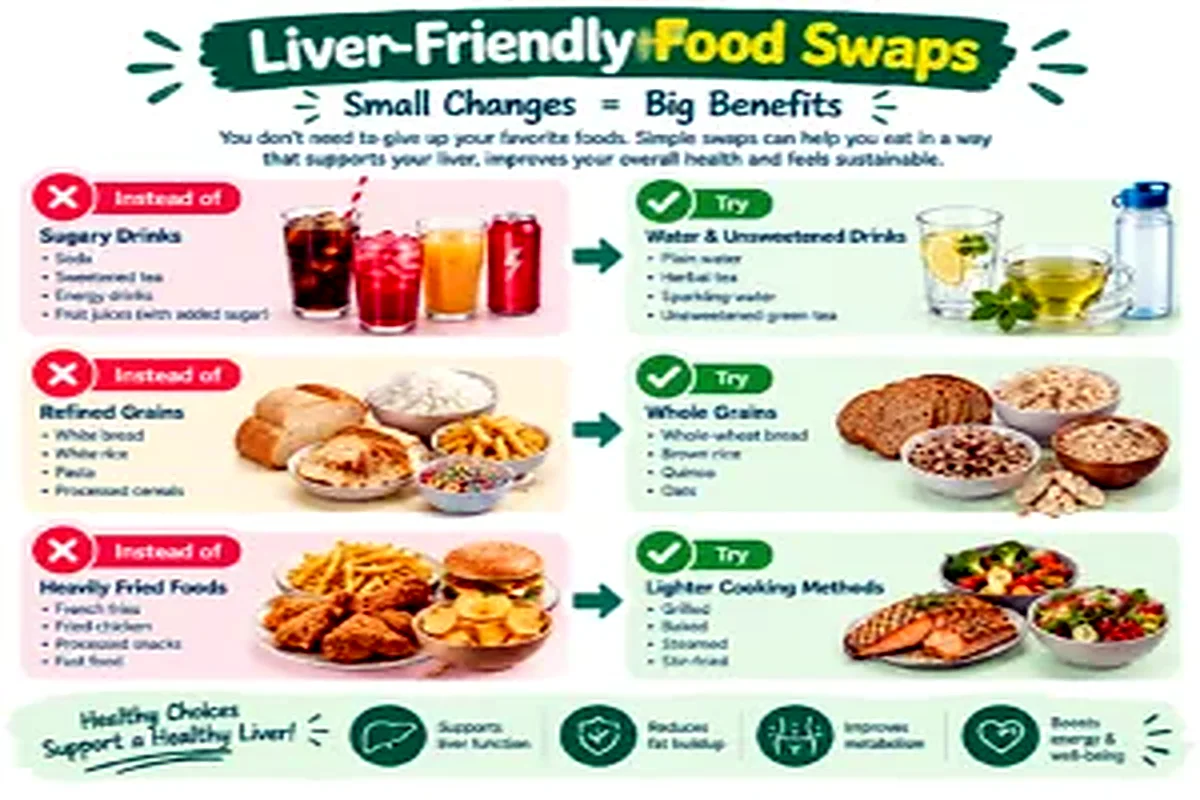
You don’t have to overhaul your entire way of eating overnight. Trading a sugary soft drink for water, choosing whole grains over refined ones more often, grilling or steaming instead of deep frying, swapping processed meat for beans, lentils, or fish, reaching for fruit instead of dessert most days, adding a vegetable or salad to meals that don’t have one, and gradually dialing back added sugar all move the needle. None of it requires perfection. The overall pattern is what counts.
Activity Matters Too, Not Just Food
Diet is only half the picture. Regular physical activity is consistently paired with dietary changes in liver-health guidance, since both affect the same underlying metabolic factors. A reasonable, non-intimidating target is working up gradually toward about 150 minutes of moderate activity a week: brisk walking, cycling, or swimming all count. You don’t need to start there. Even a few consistent minutes a day is a fine place to begin before building toward that goal.
Liver Health, Weight, and Age
For adults carrying excess weight, even modest weight loss can meaningfully reduce liver fat, though larger reductions may be needed to improve inflammation and scarring. Rapid weight loss and malnutrition, on the other hand, can make liver disease worse rather than better.
Weight-loss targets shouldn’t be casually applied to children or teenagers. Young people are still growing, and their nutritional needs are different from an adult’s. If you’re under 18 and worried about liver health, blood test results, food, or body weight, loop in a parent or guardian and talk to a pediatrician rather than starting a restrictive diet on your own.
Frequently Asked Questions About Liver-Friendly Diet
Q1: What’s the best diet for liver health?
There isn’t one universally perfect answer, but for MASLD, Mediterranean-style eating has the strongest support.
Q2: Are fruits good for the liver?
Whole fruit is fine as part of a healthy diet. The real concern is added sugar and sugary drinks, especially ones high in fructose.
Q3: Is rice bad for the liver?
Not inherently. Rice fits fine alongside vegetables, legumes, or another protein source, and whole grain versions add more fiber if you want them.
Q4: Is coffee good for the liver?
Some observational research links coffee to better liver outcomes. It isn’t a treatment, though, and it isn’t right for everyone.
Q5: How much coffee is good for the liver?
There’s no single confirmed ideal amount, but some liver clinics have suggested a few cups a day as part of a broader Mediterranean-style pattern for MASLD patients. That’s not a universal recommendation, and anyone who’s pregnant, caffeine-sensitive, or managing certain conditions should check with a doctor first.
Q6: Can diet reverse fatty liver?
Diet and lifestyle changes can genuinely improve fatty liver, particularly MASLD, and gradual weight loss in adults with excess weight can reduce liver fat and inflammation.
Q7: Is exercise as important as diet for liver health?
They’re generally treated as partners rather than substitutes. Both affect the metabolic factors, weight, insulin sensitivity, and blood fats, most closely tied to MASLD, so guidance usually recommends working on both together.
Q8: Should I take liver detox supplements?
Not without talking to a doctor first. Some herbal and dietary supplements can actually injure the liver.
Q9: What should someone with cirrhosis eat?
This needs individualized care. The right diet depends on complications, nutritional status, kidney function, medication, and the stage and cause of the disease, so a hepatologist or liver-specialist dietitian should guide any real changes.
The Bottom Line
The most useful liver-friendly diet usually isn’t the strictest one. It’s the pattern you can actually keep up while eating plenty of nutritious food and limiting what tends to cause trouble metabolically. For a lot of people, that means using the Mediterranean diet as a rough template and adapting it to local ingredients and family traditions: more vegetables and legumes, whole grains, nuts and seeds, reasonable protein, better fats, and fewer sugary drinks and packaged foods. A National Institutes of Health-funded study found that middle-aged adults who followed a Mediterranean-style diet for six years had less liver fat accumulation and a lower risk of developing fatty liver disease compared to those who didn’t. Liver health, in the end, is built through everyday eating, not through detox fads.