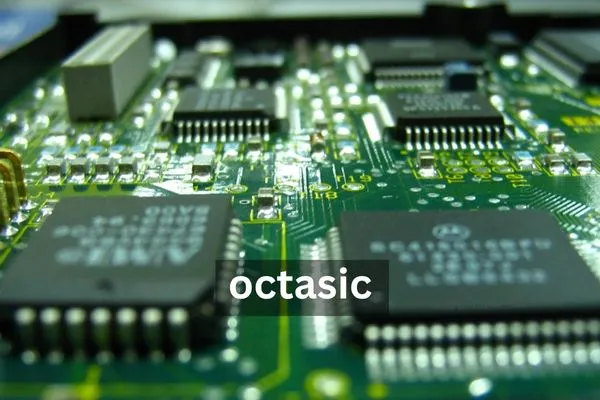
1. What Is Octasic?
Overview of Octasic
Octasic is a Canadian semiconductor and wireless technology company that designs and manufactures programmable Digital Signal Processor (DSP) System-on-Chip (SoC) devices, software-defined radio (SDR) platforms, and complete wireless subsystems. With operations in Montreal, Canada, and a US facility in Florida, Octasic serves both commercial and government clients worldwide who need highly specialized, mission-critical wireless solutions.
At its core, Octasic exists to solve a single, critical engineering challenge: delivering maximum wireless processing performance while consuming minimum power — a concept known as SWaP (Size, Weight, and Power) optimization. This makes Octasic’s products the go-to choice for applications where traditional high-power chips simply won’t work, such as drone payloads, military manpacks, portable base stations, and private IoT networks.
Unlike general-purpose chip vendors, Octasic does not make mass-market consumer chips. Instead, it builds highly specialized, fully programmable DSPs that allow original equipment manufacturers (OEMs), defense contractors, government labs, and network operators to create custom wireless solutions — from 2G all the way to 5G — on a single chip platform.
Company History and Background
Octasic was founded in Montreal, Quebec, Canada, and has spent over two decades establishing itself as a specialist in low-power signal processing technology. The company’s journey can be traced through several key innovation milestones:
Early Years — The VoIP and Media Processing Era: Octasic started as a media processing powerhouse, building DSP chips for Voice over IP (VoIP) gateways, teleconferencing systems, and media servers. During this period, the company developed its proprietary Opus DSP core architecture — a patented asynchronous design that would become its primary technological differentiator.
The Wireless Pivot: Recognizing the explosion of wireless broadband demand, Octasic applied its DSP expertise to baseband signal processing for cellular networks. The OCT2200 series was the company’s entry into wireless DSPs, supporting picocell and femtocell deployments for LTE, WiMAX, HSPA+, and EDGE standards on a single chip.
5G and Defense Era: By the late 2010s and early 2020s, Octasic had repositioned itself firmly in the 5G and defense market. The introduction of the OCT3032 SoC — featuring 32 Opus3 DSP cores — marked a generational leap, delivering 25 times more throughput than previous chips while maintaining a tiny power footprint.
2022 — New Brand Identity: In October 2022, Octasic officially unveiled a new corporate brand identity reflecting its 24 years of expertise and its ambition to lead in custom wireless solutions across commercial, government, and defense sectors.
2023 — US Market Expansion: In October 2023, Octasic created Octasic US, a Florida-based subsidiary dedicated to serving US government and Department of Defense clients, appointing Greg Gerou — a veteran defense industry executive — as Vice President and General Manager.
2025 — Ravix™ and ISR Solutions: At AUSA 2025 (the Association of the United States Army annual conference), Octasic unveiled its Ravix™ series: a new line of modular, multi-mission ISR (Intelligence, Surveillance, and Reconnaissance) payload solutions for unmanned platforms.
Core Mission and Innovation Focus
Octasic’s stated mission is to help government and commercial clients accelerate their go-to-market strategies with complex custom 5G wireless designs deployed for both terrestrial and non-terrestrial private networks. The company architects 100% of its own integrated 5G stack and maintains a world-class application development platform, giving clients the ability to design custom, proprietary, or enhanced 3GPP waveforms.
Three pillars define Octasic’s innovation focus:
Programmability: Every Octasic product is fully programmable, allowing clients to update, customize, or entirely reprogram their wireless systems in the field — a critical capability in defense and rapidly evolving commercial markets.
Low SWaP Design: Octasic’s patented asynchronous DSP architecture fundamentally eliminates clock trees and state elements used in traditional synchronous designs, making chips smaller, cooler, and more power-efficient without sacrificing performance.
Vertical Integration: Octasic provides not just silicon, but a full stack — from the physical layer (L1/PHY) software to system platforms and developer tools — giving OEM customers a complete, ready-to-deploy technology package.
2. Octasic’s Key Technologies Explained
Digital Signal Processing (DSP) Solutions
Digital Signal Processing (DSP) is the computational heart of every wireless communication system. DSPs are specialized processors that perform rapid mathematical operations on real-world signals — converting radio waves into digital data and vice versa, encoding and decoding audio and video, and applying filters, error correction, and compression algorithms in real time.
Octasic’s DSP technology is built on its proprietary Opus DSP core architecture, which has evolved through three generations:
Opus1: The original Octasic DSP core, used in early media processing chips for VoIP and teleconferencing applications. Established the fundamental asynchronous architecture that sets Octasic apart.
Opus2: The second-generation core, featured in the OCT2200 series. The Opus2 core delivers over 36 GMACs (Giga Multiply-Accumulate operations per second) with less than 55 mW of power consumption per GMAC under worst-case conditions — an industry-leading power efficiency ratio at launch.
Opus3: The third-generation core, used in the current flagship OCT3032 SoC. A single OCT3032 packs 32 Opus3 DSP cores alongside an embedded quad-core ARM Cortex-A7 processor, enabling up to 800 Mbps LTE downlink throughput while scaling power from as low as 0.5W to 8W via programmable power islands.
What makes Opus unique?
The key differentiator is Octasic’s use of asynchronous (clockless) circuit design. Traditional synchronous DSPs run on a central clock signal that ticks at a fixed rate — even when no computation is happening, the clock consumes power. Octasic’s asynchronous cores operate without a central clock, activating only when there is work to do. This “self-clocking” approach eliminates wasted switching energy, dramatically reducing idle and active power consumption while also reducing electromagnetic interference (EMI) — a bonus for military applications requiring low signal emissions.
Wireless Communication Technologies
Octasic’s wireless technology stack covers the full spectrum of modern cellular standards, delivered through its programmable DSP platform:
Software-Defined Radio (SDR): All Octasic wireless products are built on SDR principles. The physical layer behavior — frequency, modulation, waveform, protocol — is defined in software, not hardware. This means a single Octasic platform can be reprogrammed to operate as different types of base stations or radio nodes, dramatically reducing hardware lifecycle costs.
Multi-Standard Support: A single Octasic SoC can simultaneously handle multiple air interfaces, including 2G (GSM/EDGE), 3G (HSPA/UMTS), 4G (LTE/LTE-A), and 5G New Radio (NR) — both Non-Standalone (NSA) and Standalone (SA) configurations. This multi-mode capability means OEMs can build a single hardware platform that serves multiple network generations.
3GPP Stack Ownership: Unlike many chip vendors that rely on third-party protocol software, Octasic develops 100% of its own L1/PHY (physical layer) software stack. This gives the company — and its customers — deep control over protocol behavior, latency, timing, and custom waveform development. It also makes Octasic products suitable for non-standard, proprietary military waveforms that cannot be disclosed to commercial vendors.
Non-Terrestrial Network (NTN) Support: Octasic’s technology is designed for airborne and satellite-based deployments, supporting drone payloads, aircraft-mounted systems, and low-earth-orbit (LEO) satellite ground terminals where traditional base station hardware is too large or power-hungry.
VoIP and Media Processing Capabilities
While Octasic’s more recent identity is rooted in wireless and defense, the company built its technical foundation on media processing — and these capabilities remain embedded in its platform today.
The OCT2224M, part of the OCT2200 series, is a purpose-built media processing DSP capable of encoding two 1080p video streams simultaneously without dedicated hardware acceleration. This was achieved purely through the efficiency of the Opus2 DSP cores — a remarkable feat at launch that demonstrated Octasic’s processing efficiency claims.
Media processing capabilities in Octasic products include voice transcoding (converting between audio codecs like G.711, G.729, AMR), video encoding and decoding (H.264, H.265), echo cancellation, noise reduction, and media stream mixing — all relevant to VoIP gateways, unified communications systems, and real-time tactical communications.
For military customers, the combination of secure voice processing and real-time video analytics in a single low-power chip is particularly valuable for command-and-control (C2) systems.
3. Octasic Product Portfolio
Overview of Octasic DSP Chips
Octasic’s product portfolio is organized into three layers: Devices (SoC chips), Platforms (complete hardware subsystems), and Software (development tools and protocol stacks). Here is a comprehensive overview:
OCT Series and Their Applications
OCT2224M — Media Processing SoC
The OCT2224M is Octasic’s media-focused DSP, incorporating 24 Opus2 DSP cores optimized for media gateway, VoIP, video conferencing, and audio/video transcoding applications. It is capable of handling thousands of simultaneous voice channels or encoding multiple high-definition video streams without external hardware accelerators. Target applications include wireline and wireless media gateways, IP PBXs, video conferencing bridges, digital video recorders (DVRs), and medical imaging systems.
OCT2224W — Wireless Baseband SoC
Built on the same Opus2 architecture as the OCT2224M but optimized for wireless baseband processing, the OCT2224W can implement a complete multi-standard picocell capable of running LTE, WiMAX, HSPA+, EDGE, or any other commercial wireless standard simultaneously. This was a foundational product for Octasic’s wireless market entry.
OCT3032 / OCT3032W — Current Flagship 5G SoC
The OCT3032W is Octasic’s current flagship product and the most important chip in its lineup. Key specifications include:
- 32 Opus3 DSP cores plus an embedded quad-core ARM Cortex-A7 processor
- Supports up to two independent simultaneous SDR air interfaces on a single chip (OCT3032W variant)
- Capable of 800 Mbps LTE downlink throughput on a single device
- Power consumption scaling from 0.5W to 8W via programmable power islands
- Supports 5G NR (NSA and SA), LTE, LTE-Advanced, and multi-standard 2G/3G/4G/5G
- Integrated hardware accelerators for wireless encoding/decoding, security protocols, video, and error control
- Built-in on-chip video encoder/decoder engine
- Internal communication security hardware
- Manufactured in Europe to NATO-compatible supply chain standards
The OCT3032W delivers over 25 times more throughput than previous Octasic devices, making it a generational leap rather than an incremental improvement.
Product Platforms
OCT2224W — Wireless device for multi-standard small cell deployments
OctNode2 — Octasic’s dual-mode SDR platform built around the OCT3032, it was the first commercial platform to support two simultaneous 5G and/or 4G radio cells. The OctNode2 offers broad frequency agility across the sub-6GHz range, rich peripheral connectivity, and support for video and surveillance applications alongside wireless communications.
OCTBTS 3500 — A complete dual-sector small cell SDR platform designed for base station deployments. The OCTBTS 3500 is the platform that Radisys validated with its Connect RAN software, enabling 3G and LTE deployments on a single hardware base. It supports GSM, CDMA2000, HSPA, LTE, and custom air interfaces simultaneously.
Software Products
Opus Studio — Octasic’s flagship Integrated Development Environment (IDE), Opus Studio provides a comprehensive visual framework for developing embedded applications on Octasic DSPs. It includes tools for code editing, compiling, debugging, profiling, and optimizing DSP code. Opus Studio is the gateway for OEM developers who want to build custom applications on top of Octasic hardware, with access to libraries for voice, video, RF signal processing, and wireless protocols.
Physical Layer (L1/PHY) Software — Octasic’s proprietary 5G and LTE baseband software stack, ready to deploy on OCT3032W devices. This software supports 3GPP 5G NR, LTE, and other multi-standard cellular technologies, allowing OEM developers to build complete small cell base stations quickly. Developers can integrate their own L2/L3 software or work with Octasic’s software partners (such as Radisys) to enable full 3GPP cellular deployments.
Hardware vs. Software Solutions
One of Octasic’s strategic strengths is that it offers both hardware and software solutions — and can provide them together as an integrated package or separately for customers with existing hardware or software investments.
Hardware-first customers (typically OEMs and defense contractors) purchase Octasic SoC chips or platform boards and build their own products around them, using Opus Studio to develop custom applications.
Software-first customers (typically network operators and systems integrators) may license Octasic’s L1/PHY stack to run on existing Octasic platforms, using it as the baseband processing layer and adding their own L2/L3 network software on top.
Full-stack customers (common in defense and intelligence) leverage Octasic’s complete offering — chip, platform, L1 software, and developer tools — under a single vendor relationship. This simplifies procurement, support, and security vetting.
4. Industries That Use Octasic Technology
Telecommunications and Networking
The telecom industry is Octasic’s broadest commercial market. Specifically, Octasic products power:
Small Cell Infrastructure: Octasic chips are used extensively in small cell base stations — the compact, low-power nodes deployed inside buildings, on street furniture, or at cell tower edges to provide high-density LTE and 5G coverage. The OCT3032W’s ability to run multiple air interfaces on a single low-power chip makes it ideal for indoor small cells and femtocells where power and thermal constraints are strict.
Private Wireless Networks: Enterprises, utilities, ports, mines, and factories deploying private LTE or 5G networks use Octasic-based platforms to build customized base stations that operate outside of public carrier networks. Octasic’s programmability allows these networks to be configured for specific operational requirements — such as ultra-low latency for industrial robots or secure voice-only configurations for critical infrastructure.
Network-in-a-Box (NiB) Applications: Octasic’s OCT3032W is explicitly designed for NiB deployments — complete, self-contained wireless network nodes that can be rapidly deployed in emergency situations, remote areas, or temporary facilities. These are used by telcos, first responders, and military units.
Panasonic sXGP Collaboration: A notable telecom partnership is Octasic’s collaboration with Panasonic, which developed an sXGP wireless base station using the OCT3032’s Opus DSP technology. The Panasonic system delivers stable communications even in high-interference environments using unlicensed bands, targeting advanced IoT environments and non-terrestrial operations toward 5G and Beyond 5G — particularly for machine or robotic communication in warehouses, aircraft systems, and private campus networks.
Defense and Security Systems
Defense is Octasic’s fastest-growing and highest-priority market segment, and the company has made significant structural investments to serve it.
Tactical Communications: Octasic’s SWaP-optimized chips power handheld, manpack, and vehicle-mounted military radios capable of operating on military frequency bands and proprietary waveforms. These devices must function reliably in contested electromagnetic environments, making Octasic’s ability to support fully custom waveforms essential.
C5ISR Payloads: C5ISR stands for Command, Control, Communications, Computers, Combat Systems, Intelligence, Surveillance, and Reconnaissance. Octasic provides fully integrated systems for signal processing and AI machine learning applications in C5ISR platforms, including payloads for crewed and uncrewed platforms (UAS — drones, UGV — ground robots, USS — surface vessels).
Intelligence, Surveillance, and Reconnaissance (ISR): Octasic’s Ravix™ platform, unveiled at AUSA 2025, is purpose-built for ISR missions. It is a compact, software-defined Modular Payload solution engineered for RF operations on unmanned systems across Group 1–5 aerial drones and maritime vessels. The Ravix™ integrates EW (Electronic Warfare), SIGINT (Signals Intelligence), Cyber, and C5ISR applications in a SWaP-optimized package.
Spectrum Dominance and Electronic Warfare: Octasic’s SDR-based approach enables platforms that can rapidly scan, identify, and respond to signals across the electromagnetic spectrum — functions critical for electronic warfare and spectrum management in contested environments.
Law Enforcement and Homeland Security: Octasic serves law enforcement and national security agencies with covert wireless solutions, including cellular localization and geolocation systems that support 2G through 5G SA (Standalone) networks.
US Department of Defense Client Base: Following the creation of Octasic US in Florida in 2023, the company now has a dedicated American team — including program managers, product managers, RDT&E engineers, and support staff — serving US DoD, intelligence community, and federal laboratory clients.
Industrial and Embedded Systems
Beyond telecom and defense, Octasic’s technology powers a range of industrial applications:
Industrial Internet of Things (IIoT): Octasic’s chips provide the wireless connectivity backbone for IIoT sensor networks in manufacturing, energy, logistics, and utilities. The low-power characteristics of the OCT3032 are particularly valuable in battery-powered IIoT deployments.
Non-Terrestrial Networks (NTN): Octasic explicitly supports NTN use cases — satellite communications, high-altitude platform stations (HAPS), and airborne relay nodes. As the industry moves toward satellite-integrated 5G, Octasic’s NTN-ready platforms position it at the forefront of this evolution.
Public Safety Networks: Emergency responders and public safety agencies use private LTE and 5G networks built on Octasic platforms to ensure resilient communications during disasters, when public networks may be overloaded or destroyed.
5. How Octasic Stands Out from Competitors
Comparison with Radisys
Radisys is both a partner and a potential competitor to Octasic, depending on the context. Understanding this relationship reveals important distinctions:
Radisys is a system-level company focused on delivering complete Open RAN and media processing solutions, primarily targeting telecom operators and network OEMs. Radisys specializes in software — its Connect RAN portfolio provides 3G/4G/5G RAN software stacks — and high-level platform integration.
Octasic operates at a deeper hardware layer. Octasic designs the SoC chips and programmable platforms that companies like Radisys build upon. In fact, Radisys has formally partnered with Octasic, integrating its Connect RAN small cell software with the Octasic OCTBTS 3500 dual-sector SDR platform validating that Octasic’s hardware is the preferred underlying engine for companies like Radisys.
The key distinction is depth versus breadth: Radisys offers a broad, operator-facing solution stack, while Octasic offers deeper, chip-level programmability and hardware control that is essential for defense and highly customized commercial applications.
For pure OEM chip customers defense contractors building radios, or telecoms building private base stations — Octasic’s programmable SoC approach offers more flexibility than buying pre-built systems from platform-level vendors.
Performance, Scalability, and Cost Efficiency
Performance: The OCT3032W delivers the highest processing capacity per watt available in its class for 5G small cell and SDR applications, per Octasic’s published specifications. The device achieves 800 Mbps LTE downlink throughput approaching full Category 20 LTE performance from a chip that can run at less than 8W maximum power consumption. This performance-per-watt ratio has no direct equivalent in the general DSP market.
Scalability: Octasic products scale from single-chip, battery-powered sensor nodes at sub-1W operation all the way to multi-chip, multi-sector base stations supporting enterprise-scale private networks. The same OCT3032 silicon is the processing core in handheld military radios, portable NiB units, and fixed base station platforms giving OEMs a single hardware investment that scales across deployment types.
Cost Efficiency: For OEMs building hundreds or thousands of units, Octasic’s single-chip multi-mode approach directly reduces bill-of-materials (BOM) costs by consolidating functionality that would otherwise require multiple chips. The long software lifecycle because the same hardware is reprogrammed for new standards rather than replaced also extends hardware investment value.
Unique Selling Points (USP)
Octasic’s most defensible competitive advantages are:
- Patented Asynchronous DSP Architecture: No other commercially available DSP uses Octasic’s specific clockless Opus core design. This gives Octasic a structurally different power profile that cannot be replicated by competitors using traditional synchronous architectures.
- Full 5G Stack Ownership: Octasic writes 100% of its own L1/PHY software. This complete vertical integration means Octasic can support custom, classified, or proprietary waveforms that commercial stack providers cannot a unique requirement for defense and intelligence clients.
- TRL-9 Silicon: Octasic describes its SoC products as TRL-9 (Technology Readiness Level 9), meaning they are fully proven in operational environments. For defense procurement, TRL-9 status dramatically reduces program risk and accelerates fielding timelines.
- Multi-Waveform Simultaneous Operation: The ability of a single OCT3032W to run four simultaneous, independent SDR air interfaces means military platforms can conduct multiple RF missions concurrently transmitting on one frequency, receiving on another, and monitoring a third, all from one low-power chip.
- SOSA-Aligned Design Options: Octasic supports SOSA (Sensor Open Systems Architecture) aligned designs, the modular hardware standard adopted by the US military for electronic warfare and sensor systems making Octasic products directly compatible with the US DoD’s modernization frameworks.
6. Real-World Use Cases of Octasic
LTE and 5G Infrastructure
Private LTE for Mining Operations: Mining companies operating in remote locations deploy private LTE networks built on Octasic-based platforms to provide underground wireless connectivity for autonomous equipment, sensors, and personnel tracking environments where public networks don’t reach and where reliability is safety-critical.
Stadium and Venue Small Cells: In dense urban environments, venues deploy Octasic-based small cells to handle concentrated wireless traffic during events, where macro cell towers become overloaded. The OCT3032W’s multi-band support allows simultaneous service on multiple LTE bands from a single compact unit.
sXGP Private 5G for Manufacturing: The Panasonic-Octasic collaboration specifically targets warehouse and factory environments where robots, conveyor systems, and AGVs (Autonomous Guided Vehicles) require ultra-reliable low-latency wireless control a use case where consumer 5G networks are too variable and Wi-Fi is too vulnerable to interference.
Voice and Media Gateways
Enterprise VoIP Gateways: Telecom equipment manufacturers use Octasic’s OCT2224M chips to build enterprise VoIP gateways that convert traditional PSTN voice lines to IP packets, supporting thousands of simultaneous calls on a single board. The on-chip voice processing capabilities — echo cancellation, noise suppression, codec transcoding — eliminate the need for external DSP hardware.
Unified Communications Servers: Organizations deploying Cisco, Avaya, or custom UC platforms use Octasic-powered media processing cards to handle transcoding between different voice and video codecs, enabling interoperability across diverse endpoint types.
Emergency Communications: Public safety agencies deploy Octasic-powered VoIP gateways as part of NG911 (Next Generation 911) infrastructure upgrades, converting legacy analog 911 systems to IP-based emergency dispatch networks.
Signal Processing in Modern Networks
Tactical Software-Defined Radios: Military units equipped with Octasic-based tactical radios can reprogram their communications devices in the field to adapt to changing operational requirements switching frequencies, waveforms, or encryption schemes via software updates rather than hardware swaps.
Signals Intelligence (SIGINT) Collection: Octasic’s multi-waveform capability allows ISR platforms to simultaneously monitor multiple communication frequencies, identifying, geolocating, and characterizing signals of interest across a broad spectrum in real time.
Drone Communication Payloads: Unmanned aerial systems (UAS) use Octasic’s low-SWaP platforms to relay communications between ground forces, providing real-time video downlinks and two-way data communications from high-altitude vantage points without the weight penalty of traditional radio equipment.
7. Advantages and Limitations of Octasic Solutions
Key Benefits
Unprecedented Power Efficiency: The asynchronous Opus core architecture delivers measurably lower power consumption per GMAC than any traditional synchronous DSP validated by independent industry analysts at launch. For battery-powered and thermally constrained deployments, this is a fundamental advantage.
Complete Programmability: Every Octasic product is fully software-programmable, including the physical layer waveform. This makes Octasic platforms future-proof new wireless standards or custom protocols can be added via firmware updates without hardware replacement.
Proven Defense Pedigree: With TRL-9 rated silicon, a growing US DoD client base, and deployments in classified intelligence community programs, Octasic has a validated track record in the most demanding operational environments.
Single-Vendor Stack: OEMs and defense contractors can source the entire technology stack silicon, platform, L1 software, and development tools from a single vendor, simplifying procurement, support, and security auditing.
Multi-Standard Flexibility: Supporting 2G through 5G SA on the same hardware means Octasic customers are not locked into a single network generation. As networks evolve, the same hardware continues to serve through software updates.
European Manufacturing: The OCT3032 is manufactured in Europe, providing supply chain security advantages for customers with restrictions on components sourced from certain geographic regions.
Potential Challenges
Niche Positioning: Octasic’s depth of specialization is also its primary limitation for mainstream adoption. Its products are not designed for consumer electronics or high-volume commercial applications they occupy a premium, low-volume segment where price per unit is high.
Development Complexity: While Opus Studio simplifies DSP development considerably, building custom wireless applications on Octasic hardware still requires significant embedded systems and DSP engineering expertise. Organizations without experienced RF engineers or DSP developers may find the learning curve steep.
Limited Ecosystem Visibility: Compared to major semiconductor vendors like Qualcomm, Intel, or Texas Instruments, Octasic has a smaller public developer ecosystem. Documentation, community support, and third-party integrations are more limited, making early-stage development more reliant on direct engagement with the Octasic team.
Smaller Scale: As a mid-sized Canadian company, Octasic does not have the global manufacturing scale or financial resources of semiconductor giants. For customers requiring extremely high production volumes, supply assurance may require longer-term contractual commitments.
Geographic Constraint for US DoD: Although Octasic US was established in 2023 to address this, being a Canadian company adds complexity to certain US government procurement processes that require US domestic manufacturing or specific security clearances for personnel.
8. Octasic in 2026: Latest Developments
New Product Launches
Ravix™ Modular Payload System (Unveiled October 2025): The most significant recent product launch is the Ravix™ series, unveiled at AUSA 2025 in Washington, DC. Ravix™ is a compact, software-defined Modular Payload solution engineered for spectrum RF operations on unmanned systems aerial drones (Group 1–5), maritime surface vessels, and underwater vehicles. Key capabilities include integrated Electronic Warfare (EW), Signals Intelligence (SIGINT), Cyber, and C5ISR functions in a single SWaP-optimized package.
The Ravix™ system specifically addresses a persistent complaint from military operators: the proliferation of single-purpose radio boxes that each perform one function, requiring multiple separate devices per mission. Ravix™ replaces these with a unified, modular system whose mission profile can be reconfigured in real time via software adapting to mission requirements without physical hardware changes.
Additionally, Octasic introduced Ravix™ ISR systems with specific cellular geolocation capabilities, supporting 2G through 5G SA localization and geolocation for modern intelligence gathering operations.
Partnerships and Innovations
Capgemini (Cambridge Consultants): Octasic has established a partnership with Cambridge Consultants (part of Capgemini Group), whose engineering teams have created a center of excellence focused on designing, integrating, and optimizing L1/L2/L3 for 5G RAN systems for Aerospace, Defense, and Industrial customers using Octasic silicon as the hardware foundation.
Radisys Alliance: The formal technology partnership between Octasic and Radisys continues, with Radisys providing 3G/4G/5G RAN software that runs on Octasic’s OCTBTS 3500 platform enabling dual-mode base station deployments for OEM customers who need a turnkey small cell solution.
Panasonic sXGP: The extended collaboration with Panasonic focuses on next-generation Small Cells for 5G and Beyond 5G private networks, targeting mission-critical IoT and non-terrestrial applications.
US DoD Technology Transfers: A key mandate for Octasic US is to engage in technology transfer programs with federal laboratories, enabling US defense research institutions to access and build upon Octasic’s 5G wireless innovations.
Market Position
As of 2026, Octasic occupies a well-defined and defensible niche in the global wireless semiconductor market:
In the defense technology sector, Octasic is increasingly recognized as a strategic 5G vendor by the US DoD and allied defense communities, competing for a share of the significant investment in spectrum modernization, electronic warfare, and unmanned systems.
In the commercial private 5G sector, Octasic serves OEMs building custom private network equipment a market growing rapidly as enterprises, utilities, and industrial operators move beyond Wi-Fi and public cellular to dedicated private wireless.
In the satellite and NTN sector, Octasic’s NTN-ready platforms position it well for the expanding market of satellite-terrestrial integrated networks.
9. Is Octasic a Good Choice for Businesses?
Who Should Use Octasic
Octasic is the right solution for:
Defense and Intelligence Technology Companies: Any organization building military radios, electronic warfare systems, drone payloads, ISR equipment, or tactical base stations should evaluate Octasic’s OCT3032 platform. The combination of TRL-9 validation, custom waveform capability, and SWaP optimization is unmatched.
Telecom Equipment OEMs: Manufacturers of small cells, femtocells, private LTE/5G base stations, and network-in-a-box systems benefit from Octasic’s high-performance, low-power SoC that reduces hardware complexity and bill-of-materials cost.
Private 5G Network Builders: Systems integrators deploying private wireless networks for ports, campuses, factories, or utilities can build on Octasic platforms to create truly customized network equipment tailored to their specific operational requirements.
Research Institutions and Government Labs: Universities, national laboratories, and government R&D centers building experimental wireless systems or developing next-generation waveforms benefit from Octasic’s fully programmable physical layer and comprehensive development tools.
Public Safety Technology Vendors: Companies building FirstNet-compatible equipment, NG911 systems, or emergency communications networks find Octasic’s multi-standard, low-power platforms well-suited for mission-critical reliability requirements.
Cost vs. Value Analysis
Octasic’s products carry a premium price compared to mass-market DSPs but this comparison is misleading because Octasic targets a fundamentally different market segment. The relevant cost comparison is not against a $20 consumer chip, but against building the equivalent capability from multiple, less-efficient components.
Where Octasic delivers clear cost value:
When an OEM can replace multiple specialized chips (baseband processor, ARM application processor, dedicated encryption chip, video encoder) with a single OCT3032 platform, the per-unit BOM savings are significant not counting the reduced board space, cooling requirements, and engineering complexity.
Total Cost of Ownership (TCO) advantage: Because Octasic platforms are fully programmable, hardware investments extend across multiple product generations. A company that buys OCT3032 silicon today can reprogram its products for new standards or customer requirements without a hardware refresh a significant lifecycle cost advantage in fast-moving markets.
Defense procurement context: In government procurement, unit cost is less critical than performance, reliability, and supply chain security. Octasic’s TRL-9 status and European manufacturing pedigree reduce program risk which translates directly to program cost savings over the lifecycle of a defense system.
Expert Insights
Industry analysts position Octasic as a key player in the custom wireless silicon space, occupying a well-differentiated niche. Key observations from technology analysts include:
The convergence of 5G, AI, and autonomous systems in both commercial and defense markets is creating strong tailwinds for Octasic’s core value proposition. As unmanned systems proliferate from commercial drone deliveries to military drone swarms the need for compact, programmable, multi-waveform radio platforms will grow substantially.
Octasic’s decision to build a vertically integrated stack (silicon + L1 software + development tools) mirrors the strategy of successful semiconductor companies like Qualcomm, which built modem dominance through stack integration. For Octasic’s niche, this vertical control is a significant moat that is difficult for chip-only or software-only competitors to replicate.
10. Future of Octasic Technology
Role in 5G and Beyond
Octasic is well-positioned for the 5G era and is already investing in its successor. Key dimensions of Octasic’s 5G roadmap include:
5G SA (Standalone) Expansion: As mobile operators globally complete their 5G Standalone network deployments enabling true network slicing, ultra-low latency, and massive URLLC (Ultra-Reliable Low-Latency Communications) demand for 5G SA-capable private network equipment will accelerate. Octasic’s L1 software already supports 5G SA, positioning the company ahead of this transition.
Beyond 5G and 6G Research: Octasic’s collaboration with Panasonic explicitly targets “Beyond 5G” applications, and the company’s programmable architecture is philosophically aligned with the 6G research direction which heavily emphasizes reconfigurable, AI-native, and disaggregated radio architectures.
Open RAN Integration: The global telecom industry’s shift toward Open RAN (O-RAN) architecture disaggregating the base station hardware and software creates an opportunity for Octasic’s SoC platforms to serve as the hardware underpinning of open, software-defined base stations compatible with O-RAN specifications.
AI and Edge Computing Integration
Artificial intelligence is becoming inseparable from wireless communication systems, and Octasic is actively addressing this convergence:
AI-Enabled Signal Processing: Modern 5G networks increasingly use AI for beam management, interference mitigation, resource allocation, and spectrum sensing. The ARM Cortex-A7 cores embedded alongside the Opus3 DSP cores in the OCT3032 provide the general-purpose compute capacity needed to run AI inference models at the edge, directly on the radio platform.
AI-Augmented ISR: In defense applications, the Ravix™ platform is described as supporting AI machine learning applications alongside signal processing enabling automated signal classification, target recognition, and anomaly detection directly on the unmanned platform without backhaul latency.
Edge Intelligence for Private Networks: As industrial 5G networks demand real-time decision-making for robotic control, predictive maintenance, and autonomous vehicle coordination edge AI running on Octasic’s platforms can reduce dependency on centralized cloud processing, dramatically cutting latency.
Industry Trends Favoring Octasic
Several major industry trends are structurally favorable to Octasic’s market position through the late 2020s:
Proliferation of Unmanned Systems: The US DoD’s accelerating investment in uncrewed aerial, ground, and maritime systems creates sustained demand for compact, multi-mission radio payloads Octasic’s core product category.
Private 5G Adoption: Enterprise adoption of private 5G networks is projected to grow significantly through 2030, driven by Industry 4.0, smart manufacturing, and critical infrastructure digitization all target markets for Octasic-based equipment.
Spectrum Modernization in Defense: Allied defense forces worldwide are undergoing significant spectrum modernization efforts, replacing legacy radio systems with software-defined, multi-waveform platforms compatible with allied interoperability standards directly matching Octasic’s product offering.
Supply Chain Diversification: Growing concerns about semiconductor supply chain security particularly regarding components manufactured in geopolitically sensitive regions are driving defense and government buyers toward trusted alternatives. Octasic’s European manufacturing and North American headquarters provide a favorable supply chain security profile.
11. Frequently Asked Questions (FAQs)
What does Octasic do?
Octasic designs and manufactures programmable Digital Signal Processor (DSP) System-on-Chip (SoC) semiconductors, software-defined radio (SDR) platforms, and associated software tools. These products enable OEM manufacturers, defense contractors, and network operators to build custom wireless communication systems supporting standards from 2G through 5G along with proprietary military waveforms in compact, low-power form factors.
Where is Octasic used?
Octasic products are deployed globally across several key application areas: military tactical communications and electronic warfare systems, defense drone and unmanned vehicle payloads, private LTE/5G enterprise and industrial networks, public safety and emergency communications, small cell telecom infrastructure, VoIP and media processing gateways, and satellite/non-terrestrial network equipment.
Is Octasic suitable for small businesses?
Octasic is generally not the right fit for small businesses with general-purpose wireless needs. Its products are designed for OEM manufacturers and system integrators who are building custom wireless communication equipment, not for end-users deploying off-the-shelf networks. Small businesses are better served by commercial Wi-Fi or public cellular solutions. However, small technology companies developing specialized IoT devices, private network equipment, or RF research tools could potentially engage with Octasic as a chip customer, particularly if they have embedded DSP and wireless engineering expertise.
How does Octasic compare to competitors?
Octasic differentiates from competitors primarily through its patented asynchronous DSP architecture (the Opus core), which delivers industry-leading performance-per-watt for wireless applications. Unlike general-purpose DSP vendors (Texas Instruments, Analog Devices), Octasic specializes exclusively in wireless and media processing. Unlike SoC platform vendors (Qualcomm, MediaTek), Octasic serves the custom OEM market rather than high-volume consumer devices. Octasic’s closest competition comes from companies like Cavium (now Marvell) and CEVA in the embedded wireless DSP space, but Octasic’s complete vertical integration owning its silicon, L1 software, and development tools provides a deeper, more controllable platform than most competitors offer.
What is Octasic’s OCT3032W?
The OCT3032W is Octasic’s current flagship wireless SoC, featuring 32 Opus3 DSP cores and an embedded ARM Cortex-A7 quad-core processor. It supports two simultaneous independent SDR air interfaces on a single chip, covers all 3GPP standards from 2G to 5G NR, scales power from 0.5W to 8W, and delivers up to 800 Mbps LTE downlink throughput. It is the core silicon in Octasic’s wireless product line and is used in applications ranging from private 5G base stations to military tactical radios and drone payloads.
What is Opus Studio?
Opus Studio is Octasic’s Integrated Development Environment (IDE) for developing embedded DSP applications on Octasic hardware. It provides a visual framework with tools for code editing, compiling, optimizing, debugging, and profiling. It includes libraries for voice, video, RF, and generic signal processing, and serves as the primary gateway for OEM customers developing custom applications on Octasic platforms.
12. Case Studies & Success Stories
Case Study 1: Panasonic sXGP Private 5G Base Station
Challenge: Panasonic needed to develop a new class of small cell base station for deployment in industrial and manufacturing environments specifically addressing the challenge of reliable operation in unlicensed frequency bands where interference is high, and where robotic systems require ultra-reliable low-latency communications.
Solution: Panasonic partnered with Octasic and integrated the OCT3032’s Opus DSP technology into its sXGP wireless base station platform. The collaboration leveraged Octasic’s programmable processor platform to meet Panasonic’s strict low-power requirements while supporting multiple air interfaces (sXGP and 3GPP standards).
Outcome: The resulting Panasonic sXGP system delivers stable, deterministic wireless communications in high-interference industrial environments. The platform supports mission-critical IoT applications from robotic assembly lines to aircraft systems and provides a path toward 5G and Beyond 5G private network deployments. The collaboration has since expanded to address next-generation small cell requirements.
Key Takeaway: Octasic’s programmable DSP platform allowed Panasonic to achieve the performance and reliability characteristics required for industrial 5G without building a custom silicon solution from scratch accelerating time-to-market significantly.
Case Study 2: Radisys Dual-Mode 3G/LTE Small Cell
Challenge: Telecom equipment OEMs serving both 3G and LTE markets needed a hardware platform that could support both network generations simultaneously avoiding the cost and complexity of maintaining separate hardware products for each standard.
Solution: Radisys partnered with Octasic to integrate Radisys’s Connect RAN small cell software with the Octasic OCTBTS 3500 dual-sector SDR platform. The OCTBTS 3500’s programmable Octasic silicon provided the baseband processing capacity to run both GSM, CDMA2000, HSPA, and LTE air interfaces concurrently on a single hardware platform.
Outcome: OEM customers gained a single, common hardware platform supporting any combination of 3G and 4G LTE air interfaces, dramatically simplifying product portfolios and reducing manufacturing and support costs. The joint solution was commercially validated and brought to market, reinforcing Octasic’s position as a foundational platform for small cell OEMs.
Key Takeaway: Octasic’s hardware programmability directly solves the OEM challenge of multi-generational network support, providing a pathway to evolve products via software rather than hardware redesign.
Case Study 3: Octasic US DoD ISR and Tactical Communications
Challenge: US defense and intelligence community customers required a trusted supplier for advanced 5G wireless technologies specifically for software-defined radios, tactical base stations, and ISR payloads that could operate under rigorous US government procurement requirements and support classified operational requirements.
Solution: In October 2023, Octasic established Octasic US in Florida, with a dedicated team including program managers, RDT&E engineers, and a VP/GM with deep defense industry experience. The Florida facility became the US point of presence for engaging with DoD programs, federal laboratories, and intelligence community clients.
Outcome: Octasic US has rapidly grown its US government client base. By AUSA 2025, the company launched the Ravix™ tactical ISR payload system a direct product of its engagement with US defense requirements and established itself as a viable vendor of choice for 5G capabilities in the DoD modernization roadmap.
Key Takeaway: Establishing dedicated US operations with local defense industry expertise was critical for accessing the US DoD market. Octasic’s investment in Octasic US reflects a broader strategic commitment to the defense sector as a core growth market.
13. Integration Guide (For Developers)
Getting Started with Octasic DSPs
If you are an embedded systems engineer or OEM developer evaluating Octasic technology for a new product, here is a practical roadmap for engagement:
Step 1: Define Your Application Requirements
Before selecting a specific Octasic product, clearly define your application’s wireless standards requirements (2G/3G/4G/5G), frequency bands, throughput targets, power budget, form factor constraints, and deployment environment. Octasic products span several performance tiers, and matching your requirements to the correct silicon at the outset saves significant development time.
Step 2: Select the Right Octasic Platform
For LTE/5G wireless applications with strict SWaP constraints: OCT3032W (single-chip) or OctNode2 (complete platform).
Multi-sector small cell deployments: OCTBTS 3500.
The media processing or VoIP applications: OCT2224M.
As custom wireless baseband (non-5G standards or legacy): OCT2224W.
Step 3: Request an Evaluation Package
Contact Octasic directly to request an evaluation package for your target device. Octasic provides early access partners with sample devices, hardware evaluation boards, software development kits (SDKs), and comprehensive development tool access through Opus Studio. Engineering support is available throughout the evaluation process — Octasic’s business model is built on close partnership with OEM developers, not self-serve chip purchases.
Step 4: Install and Configure Opus Studio
Opus Studio is the primary development environment for all Octasic DSP-based applications. It runs on standard development workstations and provides:
- Visual application development framework
- Full-featured code editor with DSP-specific syntax support
- Compiler and optimizer for the Opus DSP core architecture
- Hardware emulator for testing without physical silicon
- Profiling tools for power consumption and performance analysis
- Debug interface supporting both software simulation and hardware-connected debugging
- Extensive library of pre-built DSP functions for voice, video, RF processing, and wireless protocols
Step 5: Work with Octasic’s L1/PHY Software
For customers building 5G or LTE base stations, Octasic’s proprietary L1/PHY software significantly accelerates development by providing a validated, ready-to-deploy physical layer stack. OEM developers integrate their own L2/L3 network software on top of Octasic’s L1 foundation — focusing their engineering efforts on application-layer differentiation rather than low-level signal processing.
Alternatively, developers with specific requirements for custom or proprietary waveforms can implement their own L1 stack using Opus Studio, leveraging Octasic’s hardware accelerators for encoding/decoding, error correction, and security functions.
Step 6: Partner Integration Options
For customers requiring complete protocol stacks (L1 through L3) or system integration support, Octasic maintains partnerships with companies including Radisys (RAN software across 3G/4G/5G) and Capgemini/Cambridge Consultants (full system design and integration services for aerospace, defense, and industrial applications). These partners can provide additional engineering resources and complete solution packages built on Octasic hardware.
Step 7: Design for SOSA Alignment (Defense Applications)
Defense developers building C5ISR or EW platforms should note that Octasic supports SOSA (Sensor Open Systems Architecture) aligned hardware designs — the modular hardware standard adopted by the US military. Designing Octasic-based boards to SOSA specifications ensures compatibility with the broader DoD modular open systems approach (MOSA) and simplifies integration with other SOSA-aligned subsystems.
Key Developer Resources
- Opus Studio IDE: Available directly from Octasic upon engagement
- Technical Documentation: Provided under NDA or as part of evaluation packages
- Application Notes: Octasic publishes technical application notes for specific use cases (small cells, SDR design, private network deployment)
- Engineering Support: Available through Octasic’s engineering teams in Montreal and via Octasic US for US-based customers
- Community: Octasic maintains a private partner community for customers with active development programs
14. Buying Guide for Octasic Products
How to Purchase Octasic Products
Octasic does not sell its products through general-purpose electronics distributors or online marketplaces. Procurement of Octasic technology follows a direct sales and partnership model appropriate for its market segment:
Direct from Octasic: For OEM customers purchasing Octasic SoC devices or complete platform products, the primary purchasing channel is direct engagement with Octasic’s sales and applications engineering teams. Contact through octasic.com initiates a qualification and evaluation process.
Through Authorized Distributors: Octasic does work with select technology distribution partners for component-level semiconductor supply to qualified OEM customers. ProcureInc lists Octasic as a supported manufacturer, suggesting distribution channel availability for authorized buyers.
Through System Integrators: For customers who want complete solutions rather than components, Octasic’s integration partners (including Radisys and Capgemini) provide finished systems built on Octasic platforms.
Evaluation Process
Octasic’s evaluation process for new customers typically involves:
Initial Qualification: A technical discussion to assess application fit and confirm that Octasic’s product lineup addresses the customer’s specific requirements.
NDA Execution: Technical documentation, silicon specifications, and software tools are provided under a Non-Disclosure Agreement to protect both Octasic’s proprietary technology and customer application information.
Sample Devices: Qualified customers receive engineering samples of the relevant SoC devices or evaluation boards for initial hardware prototyping.
Engineering Support: Octasic’s engineering team provides active support throughout the evaluation period, including technical Q&A, application notes, and development environment setup assistance.
Production Agreement: Customers that successfully complete evaluation and decide to design Octasic technology into their products enter a production supply agreement covering pricing, lead times, supply commitments, and support terms.
Procurement Considerations for Defense Customers
US government and DoD contractors should note the following:
Octasic US Facility: Defense and intelligence community customers are served primarily through Octasic US in Florida, with personnel holding appropriate US government program access credentials.
ITAR Considerations: Octasic’s defense products may be subject to International Traffic in Arms Regulations (ITAR) export control requirements. Customers should engage Octasic’s compliance team early in the procurement process to address export licensing requirements.
Federal Procurement Vehicles: Octasic US is positioned to engage with DoD procurement through standard federal contracting vehicles. For specific procurement vehicle availability and contract vehicle access, contact Octasic US directly.
Technology Transfer Programs: As part of its US market strategy, Octasic actively pursues technology transfer programs with federal laboratories — offering an alternative procurement pathway for government research institutions seeking to access Octasic’s 5G wireless innovations under government-funded R&D contracts.
Pricing Guidance
Octasic does not publish public pricing for its products, which is standard practice for the defense and specialized OEM semiconductor market. Pricing is negotiated based on:
- Specific product selected (device type, variant, configuration)
- Annual volume commitment
- Support and engineering services requirements
- Geographic region and applicable export controls
- Evaluation vs. production pricing tiers
Customers should expect premium pricing relative to mass-market DSPs — consistent with the specialized capabilities, low-volume production, and engineering support services included with Octasic technology partnerships.
Conclusion
Octasic occupies a unique and increasingly vital position in the global wireless technology landscape. As the demand for low-power, highly programmable, multi-standard wireless platforms accelerates. Driven by 5G deployment, unmanned systems proliferation, private network adoption, and defense modernization. Octasic’s patented Opus DSP architecture and vertically integrated product stack position it as an indispensable technology partner for the most demanding wireless applications on the planet.
Whether you are an OEM engineer building the next generation of private 5G infrastructure, a defense contractor developing electronic warfare payloads, or a research institution pushing the boundaries of wireless communications, Octasic’s technology offers a proven, programmable foundation that scales from sub-watt sensor radios to multi-sector tactical base stations — all from the same flexible silicon platform.
For organizations willing to invest in the evaluation and development process that Octasic’s model requires, the payoff is access to semiconductor technology that is genuinely differentiated. Genuinely difficult for competitors to replicate.
Visit This Site: Itzmagazine.com
Admin




Ahaa, its nice discussion on the topic of
this piece of writing at this place at this
website, I have read all that, so at this time me also commenting here.
Hurrah, that’s what I was exploring for, what a material!
existing here at this web site, thanks admin of this site.