Your heart beats roughly 100,000 times a day, whether you’re asleep, stuck in traffic, or halfway through a second cup of tea. Most of us never care for our heart until something goes wrong. AHA experts say as much as 80% of heart disease and stroke is preventable. Caring for your heart health is far more ordinary than you might expect. No punishing diets. No expensive supplements. Most people know they should look after their heart. But fewer know where to begin. Cut out fat? Count steps? Buy oats? Give up tea, coffee? The answer is simpler than the wellness industry makes it sound. Heart-healthy habits are mostly small, repeatable choices, and you can start on most of them today.
The American Heart Association (AHA) landed in the same place in its 2026 dietary guidance, released in March 2026 as an update to its 2021 guidance. It favors a pattern rich in vegetables, fruits and whole grains, with less sugar, salt and ultra-processed food, and it prioritizes plant-based protein. Your overall eating pattern comes first, and no single food does the job alone.
Below you’ll find the seven habits, then a practical look at the foods to eat more of, the ones to cut back on, and how to fit it all into a normal week.
In this guide: The 7 habits at a glance | Best foods for heart health | Foods to limit | Simple swaps | A heart-healthy day | Mediterranean vs DASH | FAQ
The 7 Habits for Heart Health at a Glance
- Build your meals around heart-friendly foods
- Get regular physical activity
- Protect your sleep
- Avoid tobacco and secondhand smoke
- Know and manage your blood pressure, cholesterol, and blood sugar
- Manage stress and stay connected
- Aim for consistency, not perfection
They work as a set. Better food helps your cholesterol and blood pressure, activity builds fitness, and regular checkups catch problems early.
1. Build Your Meals Around Heart-Healthy Foods
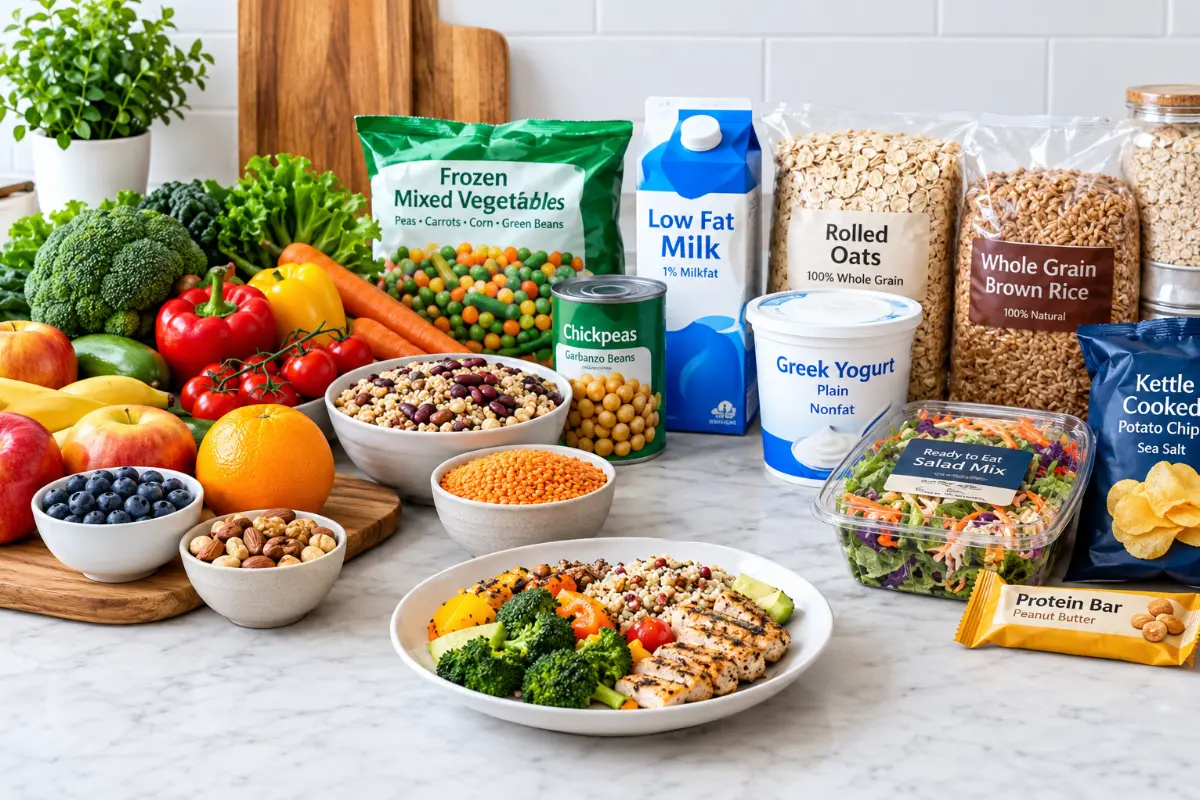
The best diet for your heart is a pattern, not a single superfood: mostly vegetables, fruits, whole grains, beans, nuts, fish, and unsaturated fats, with less salt and sugar.
Instead of asking which food is best for your heart health, ask what most of your meals look like over weeks and months. The AHA’s 2026 guidance describes nine features of a heart-healthy pattern. In plain language:
- Balance how much you eat with how active you are.
- Eat plenty of vegetables and fruits, in a wide variety.
- Choose whole grains over refined grains.
- Get protein mostly from plants, fish and seafood, and lean or low-fat options.
- Choose unsaturated fats over saturated fats.
- Choose minimally processed foods over ultra-processed ones.
- Keep added sugar low.
- Keep sodium low.
- If you don’t drink alcohol, don’t start. If you do, limit it.
2. Get Regular Physical Activity
Adults should aim for at least 150 minutes of moderate-intensity activity a week, according to the CDC. That’s about 30 minutes on five days, and brisk walking or cycling counts. The CDC also recommends muscle-strengthening activity, such as bodyweight exercises, resistance bands, or weights, on at least two days a week.
You don’t need a gym. Swimming, dancing, gardening, hiking, playing sports, and taking the stairs all count, and so does breaking up long stretches of sitting. Mayo Clinic also notes that gradually adding movement to your day is a realistic way to build a routine.
If you’re mostly sedentary, start small: a short walk, then a longer one, then regular brisk walks, then a mix of aerobic and strength work. Consistency beats intensity in the first few months. If you have heart disease, chest pain, or another medical condition, check with your doctor before starting a new routine.
3. Protect Your Sleep for Your Heart Health
Most adults do best with 7 to 9 hours of sleep a night, and the AHA counts healthy sleep as one of the eight measures in Life’s Essential Poor sleep also makes it harder to eat well and stay active.
A few habits help keep a regular sleep schedule, wind down before bed, limit late-night screens if they keep you awake, keep the bedroom quiet and comfortable, and go easy on caffeine late in the day.
Loud snoring, gasping during the night, or heavy daytime sleepiness can be signs of sleep apnea, which is linked to high blood pressure and heart rhythm problems. If that sounds familiar, mention it to your doctor.
4. Avoid Tobacco and Secondhand Smoke
If one habit deserves top priority, it’s this one. The CDC states that cigarette smoking greatly increases the risk of heart disease, and tobacco smoke damages blood vessels and the wider cardiovascular system.
That applies to every form of tobacco cigarettes, cigars, hookah (shisha), and smokeless products such as gutka and chewing tobacco. Vaping isn’t risk-free either, because nicotine raises heart rate and blood pressure. Secondhand smoke matters too, so keep smoking away from family, especially children.
Quitting helps even after many years of smoking, and Mayo Clinic notes that cardiovascular risk starts to fall once you quit. Counseling, nicotine replacement, and prescription medication all improve your odds of quitting for good, so ask your doctor or pharmacist what’s available. If you don’t smoke, don’t start.
5. Know Your Blood Pressure, Cholesterol and Blood Sugar
High blood pressure, unhealthy cholesterol, and high blood sugar often cause no symptoms, so the only way to know is to get checked.
A normal blood pressure reading is below 120/80 mmHg. Under current AHA/ACC guidelines, 130/80 or higher counts as high blood pressure, though thresholds vary a little between countries.
Depending on your age and risk, a clinician may also look at blood glucose, cholesterol, weight, family history, smoking, and physical activity. How often you need checkups depends on your age, family history and any existing conditions.
Know the Warning Signs of a Heart Attack
Chest pain or pressure, shortness of breath, pain spreading to the arm, jaw, neck or back, a cold sweat, nausea or sudden lightheadedness can all signal a heart attack. Women in particular may notice fatigue, nausea, or back or jaw pain rather than classic chest pain. If you notice these signs, call your local emergency number straight away instead of driving yourself.
6. Manage Stress and Stay Connected
Long-term stress makes healthy routines harder to keep. It can disrupt sleep, change how you eat, cut into exercise time and push some people toward smoking or drinking more.
You don’t need anything elaborate. A walk outdoors, time with family, a long chat with a friend, music, a hobby, breathing exercises or a break from your phone all help. Connection matters too: loneliness and social isolation have been linked with a higher risk of heart disease and stroke. If stress, low mood, or anxiety feels constant, talking to a doctor or counselor is a sensible next step.
7. Aim for Consistency, Not Perfection
A pattern you can keep up beats a perfect week that collapses by Thursday.
Instead of “I’ll completely change my diet tomorrow,” try “I’ll add vegetables to one more meal today.” Instead of “I need to exercise for an hour every day,” try “I’ll start with a regular walk. One handful of walnuts won’t cancel out an otherwise poor diet, and an occasional dessert won’t ruin a good one. Heart health builds over years from food, movement, sleep, staying tobacco-free, preventive care, and stress management working together.
Best Foods for Heart Health
No single food protects your heart on its own, but these groups do most of the work.
1. Vegetables
Leafy greens, broccoli, carrots, tomatoes, bell peppers, cauliflower, okra and green beans all earn a place. Fresh, frozen, and canned all count, since the AHA notes that canned and frozen produce can be nutritious and affordable. With canned vegetables, choose low-sodium or no-salt-added versions, or rinse them first.
2. Fruits
Apples, oranges, berries, bananas, pears, guava, pomegranate, and melons are all good choices. Whole fruit beats juice or sweetened fruit products because you get the fiber along with the sugar.
3. Whole Grains
Oats, brown rice, barley, whole-wheat bread and roti (atta), whole-grain pasta and quinoa keep more of the grain’s natural fiber than refined grains do. Mayo Clinic suggests swapping some refined grains for whole-grain versions.
4. Beans, Lentils and Chickpeas
Legumes give you plant protein and fiber in one food, and the AHA’s 2026 guidance prioritizes protein from plant sources such as beans, peas and lentils. Masoor, moong and chana dal, chickpeas, kidney beans (rajma) and black beans are all easy to add to dishes you already cook.
5. Nuts and Seeds
Walnuts, almonds, pistachios, peanuts, chia seeds and flaxseeds provide unsaturated fats, protein and other nutrients. Choose unsalted ones and keep to a small handful (about 30 grams) a day, since nuts are high in calories.
6. Fish
Salmon, sardines, mackerel, trout and herring are rich in omega-3 fatty acids. The AHA recommends two servings of oily fish a week. The 2026 guidance encourages eating fish and seafood regularly. Baking, grilling, or steaming is better than deep-frying.
10 Heart-Healthy Foods to Keep in Your Kitchen
| Food | Why It Can Support Heart Health | Easy Way to Use It |
| Oats | Fiber, including beta-glucan, which can help lower LDL cholesterol | Breakfast with fruit |
| Beans | Protein and fiber | Add to soups or meals |
| Lentils | Plant protein and fiber | Lentil soup or curry |
| Leafy greens | Nutrient-rich vegetables | Salads or cooked dishes |
| Berries | Fruit with fiber and nutrients | Breakfast or snack |
| Walnuts | Unsaturated fats and nutrients | Add to oats or yogurt |
| Flaxseeds | Fiber and plant-based omega-3 fats | Add ground flaxseed to oatmeal or smoothies |
| Fish | Protein, plus omega-3 fats in fatty varieties | Bake, grill or steam |
| Avocado | Mostly unsaturated fat | Add to toast or salads |
| Olive oil | Mostly unsaturated fat | Use in place of butter for everyday cooking |
None of these is a magic cure. They work because they sit inside a nutritious overall pattern.
Foods to Limit for a Healthier Heart
Heart-friendly eating isn’t only about adding foods. Cutting back on a few others makes the healthy pattern easier to keep.
1. Ultra-processed Foods
Packaged snacks, instant noodles, many ready meals, sugary cereals and soft drinks often carry a lot of sodium, added sugar or saturated fat. The AHA recommends choosing minimally processed foods, meaning foods close to their natural state.
2. Saturated Fat and Trans Fat
Fatty cuts of meat, processed meats, butter, full-fat dairy and tropical oils such as coconut and palm oil are the main sources of saturated fat. Replacing saturated fat with unsaturated fat from olive or canola oil, nuts, seeds and avocado helps lower LDL cholesterol.
Also check labels for partially hydrogenated oil, the main source of artificial trans fats. Some vanaspati (hydrogenated) ghee and commercial baked or fried foods have historically contained it.
3. Sodium
Too much sodium can raise blood pressure. Most guidelines set the upper limit at 2,300 mg a day, about one teaspoon of salt, and the AHA suggests aiming for 1,500 mg if you can. Processed foods, packaged meals, instant noodles, some canned foods, salty snacks, pickles, stock cubes, and many sauces are the usual culprits. The AHA suggests seasoning with herbs, spices or lemon instead of salt.
Potassium-rich foods such as beans, leafy greens, bananas and potatoes can help balance sodium’s effect on blood pressure. If you have kidney disease or take certain blood pressure medicines, check with your doctor before increasing potassium.
4. Added Sugar
Frequent sugary drinks and sweet foods make a healthy pattern harder to keep. The AHA recommends minimizing added sugars, especially in drinks.
5. Alcohol
The AHA’s advice is that if you don’t drink, you shouldn’t start, and if you do drink, you should limit it, because alcohol can raise blood pressure and the risk of other conditions.
Simple Heart-Healthy Swaps
You don’t have to redesign your kitchen. Small swaps like these are enough:
| Instead of | Try |
| White bread, white rice and other refined grains | Whole-wheat bread, brown rice, oats or whole-wheat roti |
| Salty packaged snacks | Unsalted nuts or fruit |
| Butter as the default cooking fat | Olive, canola or other unsaturated plant oils |
| Sugary drinks | Water or unsweetened drinks |
| Processed meats | Beans, lentils, fish or lean protein |
| Large portions of refined foods | More vegetables and whole grains |
| Frequent deep-fried foods | Baked, grilled or steamed options |
Pick the swaps you’ll actually repeat.
What a Heart-Healthy Day Can Look Like
- Morning: a breakfast with a whole grain, fruit and a protein source, such as oats with berries and walnuts.
- Lunch: vegetables, a whole grain and a protein such as beans, lentils, fish or lean poultry.
- Afternoon: a brisk walk or another activity you enjoy. Even a short walk after lunch counts.
- Evening: a balanced dinner, with salty processed foods kept off the everyday menu.
- Night: enough time in bed for a full night of sleep.
- All day: water, no tobacco, a few movement breaks and time with people you like.
Nothing here needs a special plan or expensive ingredients. It’s ordinary choices, made often.

Mediterranean vs DASH: Two Proven Eating Patterns
DASH stands for Dietary Approaches to Stop Hypertension, and it was designed to lower blood pressure. It stresses vegetables, fruit, whole grains, and low-fat dairy while limiting sodium. The Mediterranean diet centers on vegetables, fruit, whole grains, beans, nuts, fish, and olive oil. In an AHA review of ten popular eating patterns, DASH and the Mediterranean diet stood out as the best. You don’t have to follow either as a rigid menu.
Frequently Asked Questions
Q1: What are the best foods for heart health?
Vegetables, fruits, whole grains, beans, lentils, nuts, seeds, fish, and other healthy proteins all fit a heart-healthy pattern. What you eat over weeks and months matters more than any single food.
Q2: What are the 7 habits for heart health?
Eat heart-friendly foods, stay physically active, protect your sleep, avoid tobacco, know your blood pressure, cholesterol, and blood sugar, manage stress, and stick with habits you can keep up over time.
Q3: Are oats good for the heart?
Yes. Oats are a whole grain and contain beta-glucan, a soluble fiber that can help lower LDL cholesterol. They work best as part of a balanced eating pattern.
Q4: Are nuts heart healthy?
Many nuts contain unsaturated fats, protein, and other nutrients. Unsalted walnuts and almonds fit well into a heart-healthy diet, but a small handful a day is enough because nuts are high in calories.
Q5: Is fish good for heart health?
Yes. Fatty fish such as salmon, mackerel, sardines and trout provide omega-3 fatty acids. The AHA suggests at least two servings a week, baked, grilled or steamed rather than deep-fried.
Q6: Does walking help your heart?
Yes. Regular brisk walking supports cardiovascular fitness and helps manage blood pressure, cholesterol, and blood sugar.
Q7: How much exercise do adults need for heart health?
The CDC recommends at least 150 minutes of moderate-intensity activity a week, plus muscle-strengthening activity on at least two days a week. If you’ve been inactive, build up gradually.
Q8: Can a healthy diet lower cholesterol?
Diet can influence cholesterol. Fiber-rich foods and healthier fats help, and cutting back on saturated and trans fats improves your overall risk. Some people, especially those with a strong family history, also need medication prescribed by a healthcare professional.
Q9: What foods should I limit for heart health?
Foods high in saturated fat, sodium, and added sugar, plus ultra-processed foods and processed meats. The AHA also advises limiting alcohol, or not starting if you don’t drink.
Q10: What are the warning signs of a heart attack?
Chest pain or pressure, shortness of breath, pain in the arm, jaw, neck or back, a cold sweat, nausea or lightheadedness. Women may notice fatigue or nausea instead of chest pain. Call your local emergency number straight away.
Q11: Can heart disease be prevented?
Not every risk factor can be controlled. Age and family history can’t be changed. But many lifestyle and medical risk factors can be addressed, and AHA experts say as much as 80% of heart disease and stroke is preventable.
Conclusion: Take Care of Your Heart One Habit at a Time
Heart health isn’t built by one supplement, one superfood, or one perfect workout. It comes from everyday decisions: oats instead of a processed breakfast, a walk after a long day of sitting, more vegetables at dinner, beans or fish instead of processed meat, a full night’s sleep, a blood pressure check. None of these choices are dramatic, but together they add up to a lifestyle that supports your heart for the long term.
Sources
American Heart Association, 2026 Dietary Guidance to Improve Cardiovascular Health (Circulation, 2026)
American Heart Association, Following 9 key steps for a lifetime of eating well can support heart health.
American Heart Association, Life’s Essential 8
American Heart Association, Healthy Eating
Mayo Clinic, Heart-healthy diet: 8 steps to prevent heart disease
NHLBI, Choose Heart-Healthy Foods
Medical note: This article provides general health information and is not a substitute for individual medical advice. If you have heart disease, high blood pressure, high cholesterol, diabetes, or another medical condition, talk to your healthcare professional before making big changes to your diet and medication.