You do your daily chores. You eat well. You exercise. And yet the fatigue never fully lifts, the belly fat won’t move no matter what you cut, and by 4 p.m. You’re white-knuckling your way past the candy bowl. If that sounds familiar, you’re not imagining it, and it’s not a willpower problem.
The real driver may be something your last checkup didn’t mention. “Insulin resistance.” It’s one of the most-searched metabolic terms right now. It can build quietly for years, shaping how your body stores fat and handles sugar, without ever showing up on a standard blood sugar test. By the time routine labs catch it, it’s often already had a head start.
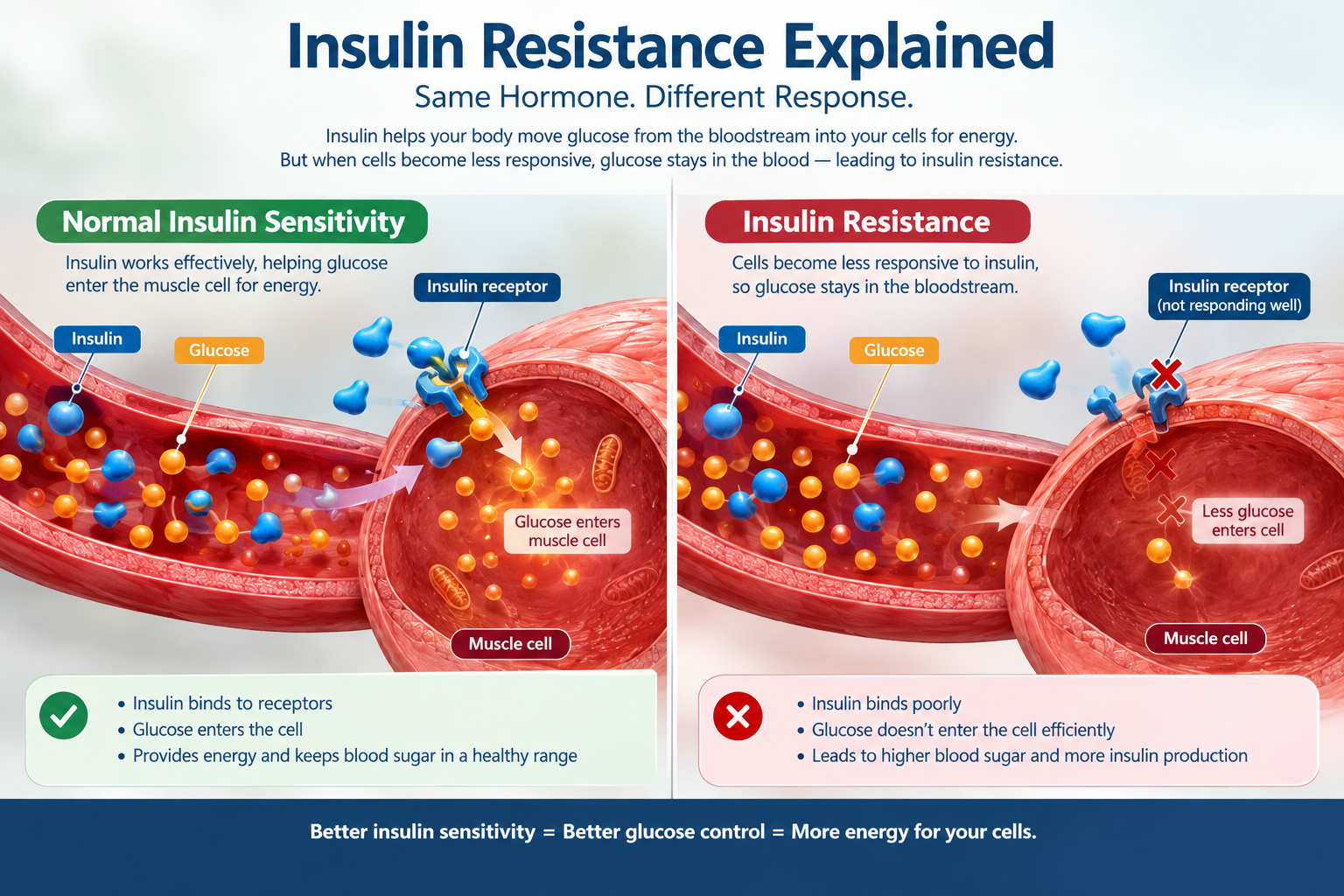
Insulin is a hormone made by your pancreas. Its main job is to help glucose, the sugar your body pulls from food, move out of your bloodstream and into your muscle, fat, and liver cells, where it gets used for energy or stored for later. Insulin resistance happens when those cells stop responding to insulin the way they should. Glucose has a harder time getting where it needs to go, so it lingers in the bloodstream instead. Your pancreas responds by producing even more insulin to try to compensate. For a while, that extra insulin can keep blood sugar looking normal on paper, which is exactly why insulin resistance is so easy to miss in routine testing.
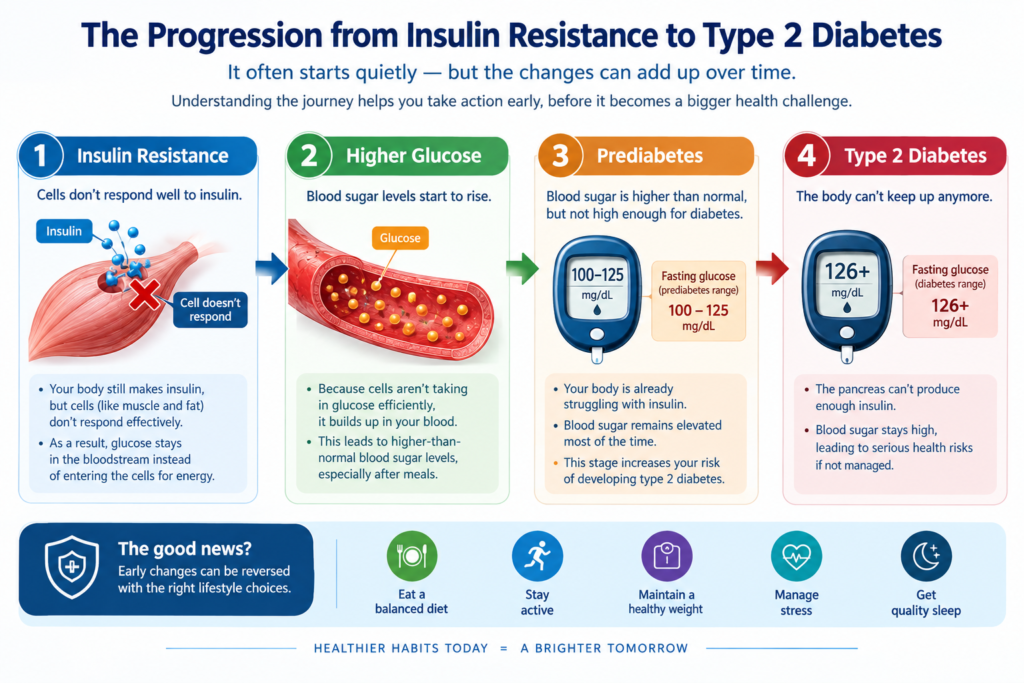
Over time, if the pancreas can’t keep up with the demand, blood sugar starts climbing. That’s the turning point where insulin resistance can progress into prediabetes and, eventually, type 2 diabetes.
Insulin Resistance vs. prediabetes vs. Type 2 Diabetes
Here’s the part that surprises people. Insulin resistance and diabetes are not the same thing. You can have insulin resistance for years without ever developing diabetes, and most people feel completely fine the whole time.
The good news is that this isn’t a life sentence, and it isn’t your fault. Genetics, activity levels, sleep, certain health conditions, and even some medications all play a role more than diet alone. Most of these are things you can actually work with.
One thing that trips people up: you don’t have to be overweight to be insulin resistant. It’s entirely possible to be a normal weight on the outside and still be carrying enough visceral fat, the fat wrapped around your internal organs, to affect how your cells respond to insulin. Doctors sometimes call this “TOFI” (thin outside, fat inside). It’s a good reminder that you genuinely can’t tell insulin resistance by looking at someone.
Insulin Resistance vs. Prediabetes vs. Type 2 Diabetes
These three terms get used interchangeably online, but they’re not the same thing.
| Term | What’s actually happening? |
| Insulin resistance | Your cells aren’t responding to insulin normally. |
| Prediabetes | Blood sugar is elevated, but not high enough to be diabetes. |
| Type 2 diabetes | Blood sugar has crossed the diagnostic threshold. |
Insulin resistance usually comes first, quietly, and can eventually lead to prediabetes and then type 2 diabetes if nothing changes. There is no single blood test that diagnoses insulin resistance in a routine doctor’s visit.
What Causes Insulin Resistance?
There’s rarely just one culprit. It’s usually a mix of the following.
1. Genetics and Family History
If a parent or sibling has type 2 diabetes, your own risk of insulin resistance goes up. Sometimes this comes down to how your genes influence glucose regulation and fat storage. This isn’t about willpower. Some of it is simply written into your biology before you make a single lifestyle choice.
2. Race and Ethnicity
Risk isn’t evenly spread across populations. People of African American, Hispanic/Latino, American Indian, Asian American, or Pacific Islander descent tend to carry a higher average risk of insulin resistance and type 2 diabetes. It’s one reason doctors weigh ethnicity alongside weight and age when deciding who to screen—no single risk profile fits everyone.
3. Not Moving Enough
Muscles are one of the biggest users of glucose in your body, and regular movement makes them better at pulling glucose out of the blood. A sedentary lifestyle does the opposite—it’s consistently linked to higher rates of insulin resistance and prediabetes.
4. Extra Body Fat Especially Around the Middle
Fat stored around your internal organs (visceral fat) is more metabolically active—and more disruptive than fat stored elsewhere.
A rough, practical marker some doctors use:
A waist over about 40 inches (102 cm) for men or 35 inches (88 cm) for women flags higher metabolic risk. It’s not a diagnosis, just one data point among several others. People without visible extra weight are still insulin resistant which loops back to why appearance alone tells you very little.
5. Underlying Health Conditions
A handful of conditions travel with insulin resistance:
- Polycystic ovary syndrome (PCOS)
- Sleep apnea
- Cushing syndrome
- Fatty liver disease (MASLD)
- Metabolic syndrome and cardiovascular disease
Some studies have also found a connection between insulin resistance and mood, including depression. The research here is still developing.
6. Certain Medications
Some drugs, like steroids and certain antipsychotics among them, nudge insulin resistance upward as a side effect. If you’re on one of these and you’re concerned, don’t stop taking it on your own. Talk to whoever prescribed it first.
The Signs People Actually Notice (Even Though They’re Not Proof of Anything)
Most of the time, insulin resistance causes zero noticeable symptoms. Still, once people are diagnosed with prediabetes or type 2 diabetes, they often look back and recognize a pattern. Things they’d noticed but hadn’t connected to anything in particular:
- Weight gain that concentrates around the belly
- Fatigue that doesn’t track with how much sleep they’re getting
- Constant hunger or cravings for sugar and refined carbs
- “Brain “fog”—trouble focusing that feels new
- Skin tags, or darker, velvety patches of skin (more on this below)
- Cuts and scrapes that seem to take longer to heal than they used to
None of these prove anything on their own; every single one has a dozen other possible explanations. This list explains what some people notice in hindsight, not to hand you a self-diagnosis checklist.
That Darkened Skin Thing
Some people with insulin resistance develop darker, thicker, almost velvety patches of skin—usually around the neck, armpits, or other skin folds. It does show up more often in people with insulin resistance; it’s not exclusive to it. Other conditions cause the same skin changes. If you notice this, get it checked rather than jumping to conclusions.
How Doctors Actually Diagnose It
Here’s the confusing part for most people: there’s no simple “insulin resistance test” you can request at a routine checkup. The direct measurement tools exist mostly in research labs. What clinicians look at is how your body is handling glucose overall, plus your broader risk picture.
HOMA-IR: The Closest Thing to a Direct Measurement
Researchers estimate insulin resistance using something called HOMA-IR (Homeostatic Model Assessment for Insulin Resistance). It takes two fasting blood draws, insulin and glucose, drawn after 8 to 12 hours without food, and runs them through a formula:
HOMA-IR = (fasting insulin × fasting glucose) ÷ 405 (glucose in mg/dL) or ÷ 22.5 (glucose in mmol/L)
Higher numbers mean more resistance.
The Tests You’re More Likely to Actually Get
A1C—estimates your average blood sugar over roughly the past two to three months.
- Below 5.7%: normal
- 5.7%–6.4%: prediabetes
- 6.5% or above: diabetes
Fasting plasma glucose measures blood sugar after a fast.
- Below 100 mg/dL: normal
- 100–125 mg/dL: prediabetes
- 126 mg/dL or above: diabetes
Oral glucose tolerance test—measures your 2-hour response after drinking a glucose solution.
- Below 140 mg/dL: normal
- 140–199 mg/dL: prediabetes
- 200 mg/dL or above: diabetes
A diabetes diagnosis usually needs confirmation across more than one reading, unless blood sugar is dramatically elevated.
Who Should Get Tested for Prediabetes?
Guidelines generally suggest testing adults of any age who carry extra weight plus at least one other risk factor. If none of those apply, screening typically starts around age 35.
Risk factors worth knowing about:
- A family history of diabetes
- Low activity levels
- High blood pressure
- Abnormal cholesterol or triglycerides
- PCOS
- A history of gestational diabetes
- Higher-risk ethnicity (see above)
- Any of the conditions listed earlier
Kids and teens follow different screening rules based on age, puberty stage, weight, and family history.
What Actually Improves Insulin Resistance
Forget the idea of a miracle food or a single ingredient to cut out. What moves the needle is boring, consistent, and time-taking.
1. Move Ideally Most Days
Physical activity is one of the fastest ways to improve how your cells respond to insulin. A daily walk, a bike ride, a dance class, whatever gets you moving, counts. Most adult guidelines land around 150 minutes of moderate activity a week, and adding strength training on top gives insulin sensitivity an extra push.
If you’re young, pregnant, managing a health condition, or just getting started, your targets will look different—build around your own situation, not a generic adult plan.
2. Build Meals Around Real Food
Rather than obsessing over one “bad” food, focus on filling your plate with a mix of:
- Vegetables and fruit
- Beans and other legumes
- Whole grains
- Nuts and seeds
- Fish, poultry, eggs, or other protein sources
- Drinks and foods without added sugar
You don’t need to cut carbs out entirely the type, the portion, and the overall pattern of what you eat matter more than banning any single food group.
3. Cut Back on Ultra-Processed Foods and Sugary Drinks
This doesn’t mean ever again. It means noticing the defaults. A soda every day adds up differently than one on a special occasion. A couple of easy swaps:
- Swap soda for water or something unsweetened
- Swap the vending-machine snack for fruit, nuts, or yogurt
Consistency beats perfection here, every time.
4. Prioritize Sleep
Poor sleep has a direct link to insulin resistance, even though the exact mechanism is still being untangled. It matters at every age, but it’s especially important for teenagers, whose sleep needs are higher than most people realize.
5. Skip Tobacco
Smoking raises metabolic and cardiovascular risk on multiple fronts. If you use tobacco, consider skipping it.

Can You Actually Reverse Insulin Resistance?
“Reverse” is a loaded word, so let’s be precise about it. Insulin resistance absolutely can improve dramatically oncehe underlying drivers are addressed. Plenty of people with prediabetes bring their blood sugar back into a normal range through lifestyle changes. Age, genetics, pregnancy, and new medications can all shift your risk again down the line, so ongoing check-ins still matter even after things improve.
Does Losing Weight Help?
For people carrying extra weight who also have prediabetes, even modest weight loss moves the needle. That’s not a universal prescription, though. Kids and teens are still growing, so restrictive dieting or aggressive weight loss isn’t the answer for them; any weight-related concerns in that age group belong in the hands of a pediatric specialist.
How Insulin Resistance Connects to Type 2 Diabetes
Insulin resistance is usually the first thing. The pancreas compensates by producing more insulin, and for a while, that’s enough to keep blood sugar in range. Eventually, though, it can’t keep pace, and glucose starts climbing, first into prediabetes territory, then potentially into type 2 diabetes.
What Else Does Insulin Resistance Show Up Alongside?
It rarely travels alone. It’s frequently found together with:
- High blood pressure
- Abnormal cholesterol or triglycerides
- Metabolic syndrome
- Fatty liver disease
- Cardiovascular disease
- PCOS
- Prediabetes and type 2 diabetes
This is exactly why a good doctor looks at the whole picture blood pressure, cholesterol, and liver markers rather than fixating on one number in isolation.
A Simple Starting Point
You don’t have to overhaul your entire life this week. If you’re not sure where to begin:
- Ask your doctor whether you actually need blood sugar testing.
- Find a form of movement that fits your life and stick with it.
- Build meals around whole foods more often than not.
- Swap in water or unsweetened drinks where you can.
- Protect your sleep.
- Skip tobacco.
- If testing shows prediabetes, follow up don’t let it sit.
Small, sustained changes beat extreme ones almost every time.
Frequently Asked Questions
Q1: What’s the main cause of insulin resistance?
There isn’t a single cause; it’s usually genetics, ethnicity, inactivity, extra body fat, certain health conditions, and sometimes medications.
Q2: Can you have insulin resistance without having diabetes?
Yes, and it’s actually the more common scenario. Insulin resistance can exist for years before blood sugar ever reaches diabetic levels.
Q3: What are the earliest signs of insulin resistance?
Often, there are none. Some people later recognize fatigue, belly weight gain, sugar cravings, or skin changes in hindsight—but none of these confirm anything on their own.
Q4: What blood test actually checks for insulin resistance?
There’s no single routine test for it. HOMA-IR is the closest thing, using fasting insulin and glucose, but it’s mostly used in research. Doctors typically rely on A1C, fasting glucose, or an oral glucose tolerance test instead.
Q5: Does an A1C of 5.7 mean I’m insulin resistant?
It puts you in the prediabetes range, but A1C doesn’t directly measure insulin resistance. It measures average blood sugar. A doctor needs to interpret it alongside everything else.
Q6: Can exercise actually improve insulin sensitivity?
Yes, both cardio and strength training help, and the effect is well documented.
Q7: Can a thin person be insulin resistant?
Yes. Visceral fat, around your organs, matters more than how you look on the outside, so body size alone isn’t a reliable indicator.
Q8: Are there foods I should avoid?
No single food is the villain, but leaning heavily on sugary drinks and ultra-processed snacks makes it harder to keep blood sugar steady. The overall pattern matters more than any one item.
Q9: Can teenagers develop insulin resistance?
Yes, and screening for that age group follows different rules than adult guidelines.
Q10: Is insulin resistance just another word for diabetes?
No. Insulin resistance is reduced responsiveness to insulin diabetes is a diagnosis based on blood sugar meeting specific thresholds. One can lead to the other, but they’re not the same thing.
Q11: Can insulin resistance go away for good?
It can improve significantly, and prediabetes can return to normal ranges. But since risk can shift again with age or other factors, ongoing monitoring still matters.
The Bottom Line
Insulin resistance is something you cannot diagnose by how you look or feel. It develops quietly, which is exactly why testing tends to catch it before symptoms ever would. The earlier it’s caught, the more room you have to change course. Usually through a combination of movement, sleep, food choices, and, when appropriate, medication, rather than any single dramatic fix.
If there’s one thing worth taking away from all of this, skip the extreme diet, skip the supplement with the too-good-to-be-true claims, and start with the basics that actually have evidence behind them.

Saba Shafique is a Content Writer at ITZ Magazine, creating clear, informative, and reader-friendly content covering health, fitness, wellness, nutrition, and healthy living. She focuses on making complex topics easy to understand while providing practical information readers can use in everyday life.


One thought on “Insulin Resistance | what to know ,symptoms,treatment,prevention.”