
Think about the last time you had a liver test. Most people can’t remember, because the liver rarely complains. It can be inflamed by hepatitis for ten or twenty years, quietly scarring, with no pain and no warning. Then one day a routine test or a strange symptom brings it into focus. Liver cancer is often like this. It stays silent while the risk builds, and the people who catch it in time are usually the ones who knew they were at risk and got checked. If you’ve ever had an injection at a roadside clinic, dental work, a transfusion, or a piercing, or if hepatitis runs in your family, the next few minutes could matter more than you expect.
Quick answer: Liver cancer is cancer that starts in the liver. The most common type in adults is hepatocellular carcinoma (HCC). It often causes no symptoms early on, which is why people with chronic hepatitis B, hepatitis C, or cirrhosis are advised to have regular ultrasound checks. Vaccination, hepatitis testing and treatment, limiting alcohol, and keeping a healthy weight all lower the risk.
Picture someone who goes to work, eats dinner with family, and feels fine. Meanwhile, a tumor is growing quietly in their liver. That’s the hard thing about this cancer. It rarely warns you early.
This guide covers what liver cancer is, the symptoms worth acting on, how hepatitis fits in, how doctors diagnose and treat it, and what you can do to lower your risk.
What is Liver Cancer?
Liver cancer is cancer that begins in the cells of the liver. The most common form in adults is hepatocellular carcinoma (HCC), which starts in hepatocytes, the liver’s main working cells.
It helps to know the difference between two situations:
- Primary liver cancer starts in the liver itself.
- Secondary (metastatic) liver cancer starts somewhere else, such as the colon, breast, lung, or stomach, and spreads to the liver.
In many Western countries, secondary cancer in the liver is more common than primary. In South Asia, East Asia, and Africa, primary liver cancer linked to hepatitis is the bigger problem. Doctors treat secondary cancer according to where it began, so it isn’t managed as liver cancer.
How common is Liver Cancer?
The International Agency for Research on Cancer (IARC) estimates that almost 850,000 people were diagnosed with liver cancer worldwide in 2024, and more than 730,000 died from it (GLOBOCAN 2024, reported by IARC in July 2026).
It isn’t spread evenly. Rates are highest in parts of East Asia and sub-Saharan Africa, where hepatitis B and aflatoxin exposure are common. They’re also high where hepatitis C is widespread, and they’ve been climbing in countries with more obesity and fatty liver disease.
IARC classifies hepatitis B, C, and D viruses as carcinogenic to humans. That makes viral hepatitis one of the most preventable causes of cancer we know of.
What are the types of Liver Cancer?
There are four main groups.
- Hepatocellular carcinoma (HCC): The most common primary liver cancer in adults. It’s strongly linked to chronic hepatitis B or C, cirrhosis, fatty liver disease, heavy alcohol use, and some inherited liver conditions. Most cases develop in a cirrhotic liver, but not all.
- Intrahepatic cholangiocarcinoma: Cancer of the bile ducts inside the liver. Risk factors include long-term bile duct inflammation, bile duct stones, chronic viral hepatitis and, in parts of Southeast Asia, liver fluke infection. It’s treated differently from HCC.
- Hepatic angiosarcoma: A rare cancer of the cells lining the liver’s blood vessels.
- Childhood liver cancers: Children can develop hepatoblastoma and, less often, a childhood form of HCC. They’re treated differently from adult cases.
How is hepatitis linked to liver cancer?
Short answer: Chronic hepatitis B, C, and D infections keep the liver inflamed for years. That can lead to scarring (cirrhosis) and, in some people, cancer. Hepatitis A and E don’t normally cause this.
Hepatitis simply means inflammation of the liver. Five viruses cause the main types, called A, B, C, D, and E, but only some raise cancer risk. The ones that matter are B, C, and D because they can become chronic. Together they affect more than 300 million people and cause more than 1.3 million deaths a year, mostly from cirrhosis and liver cancer, according to WHO.
1. Hepatitis A
Hepatitis A is a short-term infection spread through contaminated food and water. It doesn’t become chronic and doesn’t cause liver cancer. A vaccine is available.
2. Hepatitis B
Hepatitis B is one of the leading infectious causes of liver cancer worldwide. Long-term infection can lead to fibrosis, cirrhosis, and HCC. Unlike most other causes, it can lead to liver cancer even without cirrhosis, which is why regular checks matter for carriers.
There’s a very effective vaccine. WHO recommends a dose at birth to stop mother-to-child transmission, which is how many chronic infections begin. Treatment usually controls the virus and lowers the risk of complications, but it rarely cures it.
3. Hepatitis C
Hepatitis C spreads through blood, for example, through unsafe injections, contaminated equipment, and unscreened transfusions. It often becomes chronic and may cause no symptoms for decades before scarring the liver.
There’s no vaccine, but there is a cure. Modern antiviral tablets cure more than 95% of people treated. Curing the virus lowers the risk of complications, though people who already have advanced scarring may still need regular liver cancer checks afterward.
4. Hepatitis D
Hepatitis D only infects people who already have hepatitis B, and the two together damage the liver faster. WHO says people with both face a two- to six-times-higher risk of liver cancer than those with hepatitis B alone? IARC classified hepatitis D as carcinogenic to humans in 2025. The hepatitis B vaccine prevents hepatitis D too.
5. Hepatitis E
Hepatitis E spreads mostly through contaminated water and food. Most cases clear on their own, and it isn’t a major cause of liver cancer. It can be dangerous in pregnancy, and in people with weakened immunity, such as transplant recipients, it can become chronic. Safe water and food hygiene are the main protection.
The five types compared
| Type | Becomes chronic? | Vaccine? | Liver cancer link |
| Hepatitis A | No | Yes. | Not a cause |
| Hepatitis B | In some people | Yes. | Major risk factor |
| Hepatitis C | Often, if untreated | No (but curable) | Major risk factor |
| Hepatitis D | Only with hepatitis B | Prevented by hepatitis B vaccine | Important risk factor |
| Hepatitis E | Rarely (weak immunity) | Not widely available | Not a major cause |
What causes liver cancer, and who is at risk?
Cancer starts when cells pick up DNA changes that let them grow out of control. In the liver, years of injury make that more likely, because damaged cells keep dying and regenerating.
A common path runs from long-term inflammation to fibrosis (scarring) to cirrhosis, and cirrhosis raises the risk of cancer. It isn’t the only path, though. Hepatitis B can trigger cancer before cirrhosis develops.
The main risk factors are
- Chronic hepatitis B or C. The biggest causes worldwide.
- Cirrhosis. Advanced scarring from any cause, including viral hepatitis and alcohol.
- Fatty liver disease. Metabolic dysfunction-associated steatotic liver disease (MASLD) and its more inflammatory form (MASH) raise risk, especially once scarring is advanced.
- Heavy alcohol use. Years of heavy drinking damage the liver and can lead to cirrhosis.
- Smoking.
- Obesity and diabetes. Both raise risk, partly through fatty liver.
- Inherited conditions. Hereditary hemochromatosis, Wilson disease, and alpha-1 antitrypsin deficiency.
- Being male or older. Liver cancer is more common in men and older adults.
- Co-infections. HIV alongside hepatitis B or C speeds up liver damage.
Having a risk factor doesn’t mean you’ll get liver cancer. It means the conversation about testing and prevention is worth having.
What are the symptoms of liver cancer?
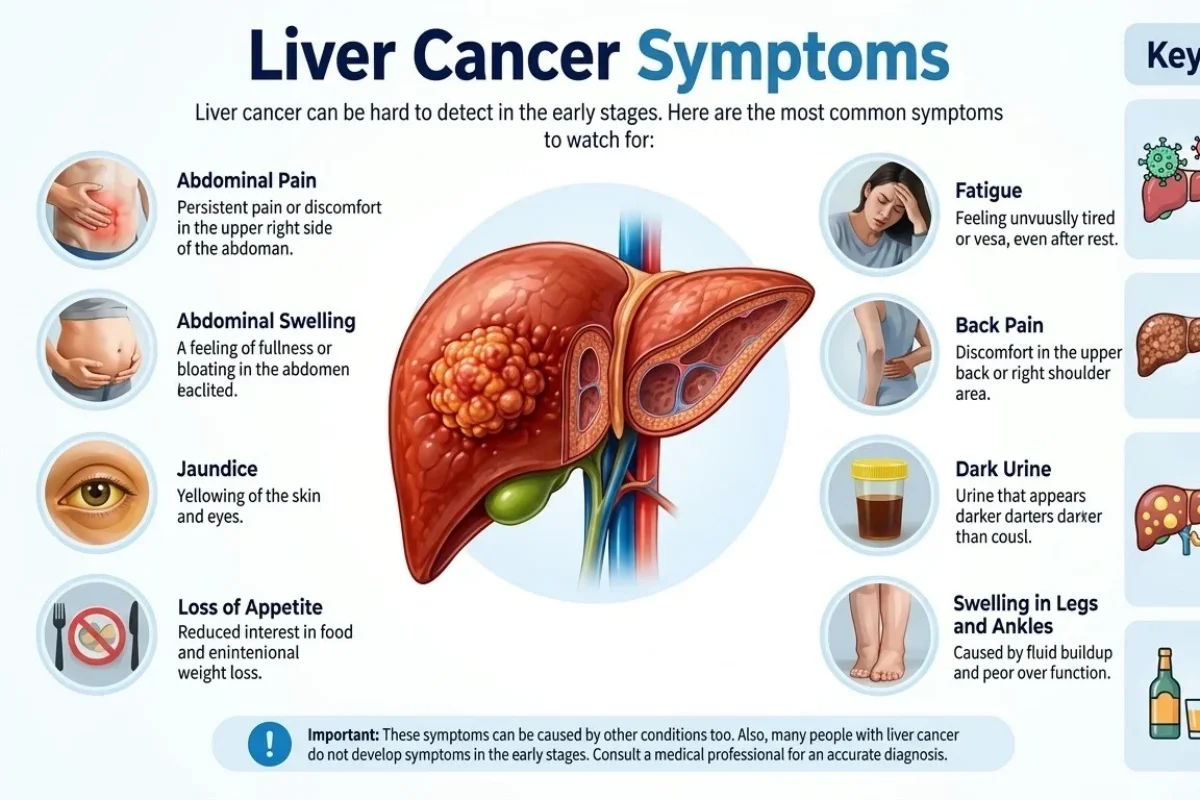
Short answer: Early liver cancer often has no symptoms. Later signs can include weight loss, poor appetite, tiredness, pain in the upper right abdomen, a swollen belly, and yellow skin or eyes.
The full list of possible symptoms:
- Unexplained weight loss
- Loss of appetite, or feeling full after eating very little
- Ongoing tiredness or weakness
- Pain or discomfort in the upper right abdomen, sometimes reaching the right shoulder
- Swelling of the abdomen or legs
- Nausea or vomiting
- Yellow skin or eyes (jaundice)
- Dark urine and pale stools
- Itching
- Fever
- Easy bruising or bleeding
- A lump or fullness under the right ribs
- Confusion or unusual sleepiness in advanced liver disease
Plenty of other conditions cause these too, so having one doesn’t mean you have cancer. If any of them lasts or can’t be explained, it deserves a doctor’s assessment.
Who should have regular liver cancer checks?
Short answer: People at high risk, such as those with cirrhosis or certain chronic hepatitis B carriers, usually have a liver ultrasound, with or without an AFP blood test, about every six months. There’s no routine screening for people at average risk.
Small tumors are painless and sit beneath the rib cage, so a doctor can’t feel them. That’s why high-risk patients are monitored before symptoms appear. Guidelines vary, so your doctor decides, but surveillance is usually advised for:
- People with cirrhosis from any cause
- People with chronic hepatitis B, particularly older adults, those with a family history of liver cancer, and people from regions where hepatitis B is common
- People with advanced fibrosis from hepatitis C or fatty liver disease
Catching a tumor at this stage opens up far more treatment options.
How is liver cancer diagnosed and staged?
No single test diagnoses every liver cancer, so doctors combine several.
- Medical history and exam: Your doctor asks about hepatitis, cirrhosis, alcohol, diabetes, family history, and past cancers.
- Blood tests: These check liver function, blood counts, clotting, and hepatitis status. Alpha-fetoprotein (AFP) can be raised in some liver cancers, but many people with liver cancer have normal levels, and AFP can rise for other reasons. It helps but can’t settle the question alone.
- Ultrasound: Often the first scan and the standard tool for surveillance.
- CT scan: Shows the size and position of tumors, blood vessel involvement, and possible spread.
- MRI: Gives very detailed pictures. In people with cirrhosis, classic scan features can confirm HCC without a biopsy.
- Biopsy: A small tissue sample is examined under a microscope. It isn’t always needed. It’s used more when scans are unclear or the type of cancer is uncertain.
What does “stage” mean?
Staging describes how far the cancer has spread and guides treatment. Doctors look at the size and number of tumors, whether blood vessels are involved, and whether it has spread beyond the liver. Liver cancer is unusual because the condition of the liver matters as much as the tumor.
How is liver cancer treated?
There’s no single best treatment. The plan depends on the type of cancer, stage, tumor size and number, liver function, overall health, and what matters to you. A team of specialists, usually a liver doctor, surgeon, radiologist, and oncologist, reviews each case together.
- Surgery: If the cancer is limited and the rest of the liver is healthy enough, surgeons can remove the part with the tumor (partial hepatectomy). The liver can regrow, so the remaining tissue takes over.
- Liver transplant: For selected patients, a transplant treats both the tumor and the failing liver beneath it. Strict criteria apply, usually based on tumor size and number.
- Ablation: Destroys tumor tissue with heat, cold, or alcohol, often through a needle guided by imaging. Radiofrequency and microwave ablation are the most common. It suits small tumors or people who can’t have surgery.
- Embolization and chemoembolization: Liver tumors get much of their blood from the hepatic artery. Doctors can block that supply (embolization) or deliver chemotherapy straight to the tumor and then block it (TACE). A related method, radio embolization, uses tiny radioactive beads.
- Radiation therapy: Techniques such as stereotactic body radiation therapy (SBRT) aim high doses precisely at the tumor. It’s used when other local treatments aren’t suitable or to ease symptoms.
- Targeted therapy and immunotherapy: For advanced disease, options include targeted tablets; the choice depends on liver function and other health conditions, and it changes as new research appears. Bile duct cancer is often treated with chemotherapy combined with immunotherapy.
- Supportive and palliative care: Palliative care isn’t only for the end of life. It helps manage pain, nausea, tiredness, and stress at any stage, alongside treatment.
Can liver cancer be cured?
Short answer: Sometimes, when the cancer is found early, it can be treated with surgery, transplant, or ablation. Advanced liver cancer usually can’t be cured, but treatment can control it and extend life.
Outcomes vary widely. In the United States, roughly 4 in 10 people diagnosed while the cancer is still confined to the liver are alive five years later, compared with only a few in 100 once it has spread to distant organs. These are population averages, not predictions for any one person, and treatments keep improving. The clearest lesson from the numbers is that early detection makes a big difference.
Living with a diagnosis affects far more than appointments. People worry about work, food, exercise, family, and money. There’s no single liver cancer diet, so a dietitian can tailor advice to your liver function and treatment. Herbal and unregulated remedies can injure the liver or interfere with treatment, so tell your care team about anything you take. Talking with family, a counselor, or other patients helps too.
How can you lower your risk of liver cancer?
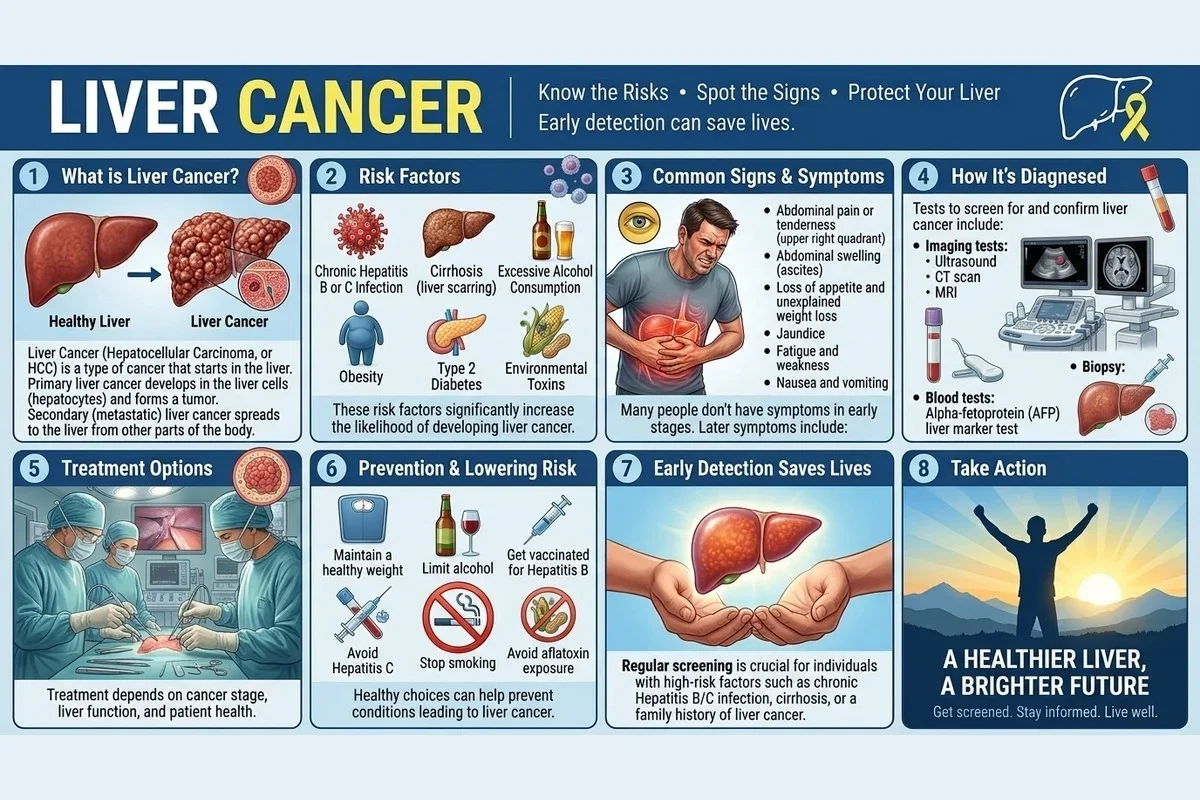
Not every case can be prevented, but many can. Here’s what helps most:
- Get vaccinated against hepatitis B. Babies should get a dose at birth. Adults, health workers, and household contacts of infected people should check that they’re covered. There’s no vaccine for hepatitis C.
- Get tested. Hepatitis B and C can be silent for decades, and a simple blood test finds them.
- Treat chronic hepatitis. Hepatitis C can be cured. Hepatitis B can be controlled with medicine, which reduces liver damage and cancer risk.
- Limit alcohol. Years of heavy drinking lead to cirrhosis.
- Look after your metabolic health. A healthy weight, regular activity, balanced eating, and good diabetes control protect the liver.
- Don’t smoke.
- Reduce aflatoxin exposure. Store grains, nuts, and spices dry and airtight, and throw away moldy food.
- Avoid blood exposure. Don’t share razors or needles, and insist on new syringes and sterile equipment for injections, dental work, and piercings.
What are the common myths about liver cancer?
- “Liver cancer always hurts.” Early liver cancer is often painless.
- “Normal liver tests mean I’m safe.” Blood tests can be normal even when a tumor is present. Ultrasound is what finds small tumors in high-risk people.
- “Only drinkers get liver cancer.” Hepatitis, fatty liver disease, aflatoxin, smoking, and inherited conditions all play a part.
- “Hepatitis always leads to cancer.” The five viruses behave differently, and many people with chronic hepatitis never develop cancer.
- “Hepatitis C can’t be cured.” Modern tablets cure more than 95% of people.
- “Everyone should be screened every year.” Regular checks are advised for people at high risk, not the general public.
- “Herbal cleanses protect the liver.” There’s no proof they do, and some products can harm it.
When should you see a doctor?
Don’t put it off if you notice yellow skin or eyes, unexplained weight loss, persistent pain in the upper right abdomen, a swollen belly, unusual bruising or bleeding, lasting loss of appetite or tiredness, or a new lump under the right ribs. Most of the time these don’t mean cancer, but they should be checked.
If you already have chronic hepatitis or cirrhosis, keep your follow-up appointments even when you feel well.
Frequently asked questions
Q1: What is the most common type of liver cancer?
Hepatocellular carcinoma (HCC) is the most common primary liver cancer in adults. It starts in hepatocytes, the liver’s main cells, and usually develops in people with long-term liver disease.
Q2: What are the first signs of liver cancer?
There often aren’t any. When signs do appear, they include weight loss, poor appetite, tiredness, upper abdominal discomfort, swelling, and jaundice.
Q3: Can hepatitis cause liver cancer?
Yes. Chronic hepatitis B, C, and D can cause liver cancer through years of inflammation and scarring. Hepatitis A and E don’t usually do this.
Q5: Which hepatitis is most linked to liver cancer?
Hepatitis B and C are the leading causes worldwide. Hepatitis D adds extra risk in people who also have hepatitis B.
Q6: Can hepatitis C be cured?
Yes. Modern antiviral tablets cure more than 95% of people treated, usually within a few months.
Q7: Does cirrhosis always lead to liver cancer?
No, but it raises the risk enough that regular ultrasound checks are recommended.
Q8: Can you get liver cancer without hepatitis?
Yes. Fatty liver disease, alcohol, aflatoxin, smoking, and inherited conditions can all cause it.
Q9: Is there a blood test for liver cancer?
AFP and liver function tests give clues, but no blood test can confirm liver cancer on its own. Scans, and sometimes a biopsy, are needed.
Q10: Is liver cancer the same as cancer that has spread to the liver?
No. Cancer that spreads to the liver from another organ is treated according to where it started.
Key takeaways
- Liver cancer starts in the liver. Cancer that spreads there from elsewhere is a different condition.
- HCC is the most common adult type.
- Early liver cancer often has no symptoms.
- Chronic hepatitis B, C, and D are major causes. Hepatitis A and E aren’t.
- Hepatitis B can cause liver cancer even without cirrhosis.
- Fatty liver, alcohol, aflatoxin, smoking, obesity, and diabetes also raise risk.
- People at high risk should have an ultrasound roughly every six months.
- Hepatitis B vaccination prevents hepatitis B and D. Hepatitis C has no vaccine but can be cured.
- Almost 850,000 people were diagnosed, and more than 730,000 died worldwide in 2024 (IARC).
Conclusion
Liver cancer often grows quietly; it rarely appears out of nowhere. For most people it follows years of liver damage from hepatitis, alcohol, fatty liver, or toxins, and that gives you time to act.
Get vaccinated, get tested, treat chronic infections, protect your liver, and keep up with follow-up if you’re at higher risk. Feeling well is good news, but it isn’t a substitute for a check-up.
This article is for general information and isn’t a substitute for professional medical advice. See a doctor about any symptoms or concerns.
Sources
- NCI: What Is Liver Cancer?
- NCI: Causes and risk factors
- NCI: Liver cancer treatment
- American Cancer Society: Liver cancer detection and diagnosis
- Mayo Clinic: Liver cancer
- WHO EMRO: Hepatitis B and C in Pakistan

Saba Shafique is a Content Writer at ITZ Magazine, creating clear, informative, and reader-friendly content covering health, fitness, wellness, nutrition, and healthy living. She focuses on making complex topics easy to understand while providing practical information readers can use in everyday life.