Most people with high blood pressure feel completely normal. No headache, no warning twinge, nothing that says “something’s off.” That’s exactly why hypertension is nicknamed the “silent killer.” It quietly strains your heart, brain, kidneys, and blood vessels for years before it announces itself.
The World Health Organization estimates that about 1.4 billion adults aged 30 to 79 live with hypertension worldwide. Nearly half of them don’t know it, and only around 1 in 5 have it under control.
The only real way to know your numbers is to check them. The American Heart Association defines high blood pressure as 130/80 mmHg or higher, and an affordable home monitor makes tracking easy.
And here’s the encouraging part: hypertension is one of the most manageable major health risks. A Lancet analysis of more than 600,000 people found that lowering systolic pressure by just 10 mmHg cut major cardiovascular events by about 20% and stroke by 27%. Monitoring, lifestyle changes, and medication when needed all work. If you haven’t had a reading lately, ask your doctor or pharmacist for one.
What is High Blood Pressure, exactly?
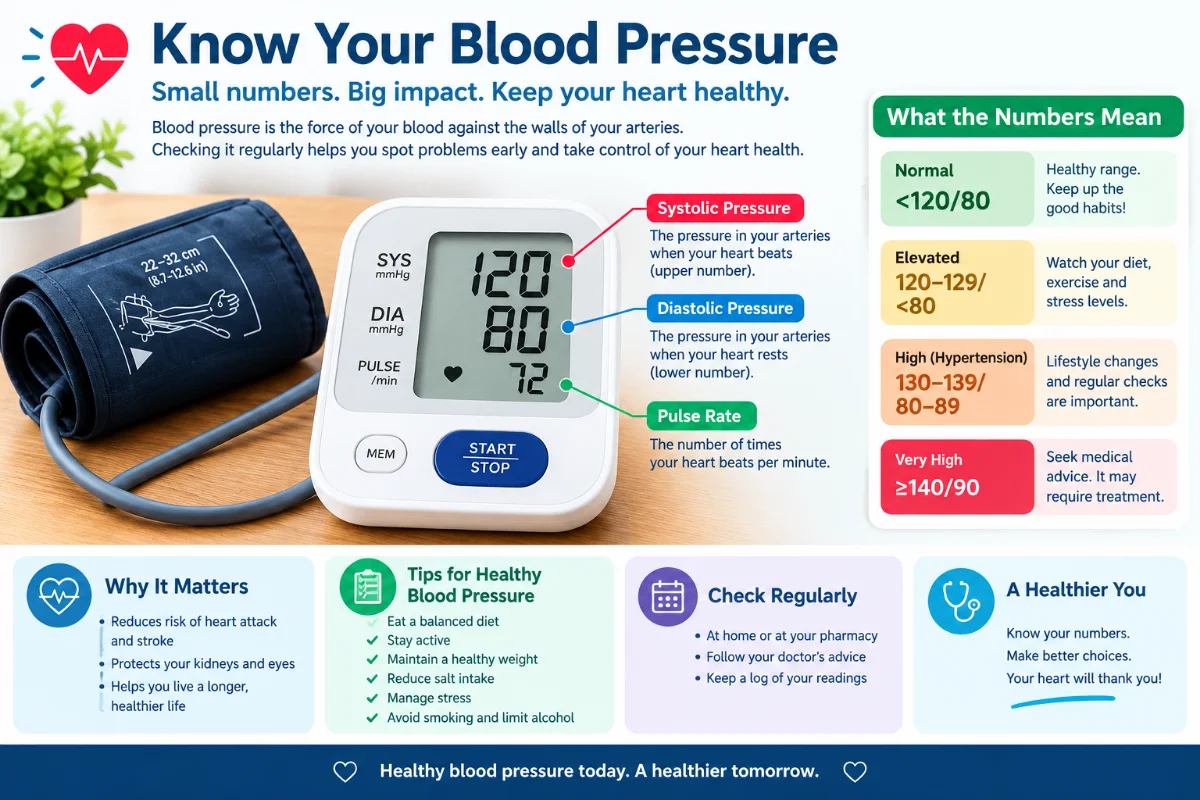
Every time your heart beats, it pushes blood through your arteries with a certain amount of force; that force is your blood pressure. A reading always has two numbers:
- Systolic pressure (the top number) is the pressure in your arteries while your heart is contracting.
- Diastolic pressure (the bottom number) while your heart rests between beats.
A reading of 120/80 mmHg, for instance, means a systolic pressure of 120 and a diastolic pressure of 80.
When those numbers stay elevated for a long stretch of time, your heart and arteries are working under more strain than they’re designed for.
Why It’s Worth Taking Seriously
Over time, unmanaged hypertension can damage blood vessels throughout the body and raise your risk of:
- Heart disease and heart attack
- Stroke
- Heart failure
- Kidney disease
- Other cardiovascular complications
The World Health Organization ranks hypertension among the leading causes of premature death globally.
What Counts as High Blood Pressure?
American Heart Association categories for adults:
| Blood pressure reading | Category |
| Below 120/80 mmHg | Normal |
| 120 to 129 systolic, below 80 diastolic | Elevated |
| 130 to 139 systolic or 80 to 89 diastolic | Stage 1 hypertension |
| 140+ systolic or 90+ diastolic | Stage 2 hypertension |
| Above 180 and/or 120 | Severe (hypertensive crisis) |
The WHO uses a simpler line: adult hypertension is defined as 140/90 mmHg or higher, confirmed with measurements taken on two separate days.
That difference matters in practice. One high reading at a doctor’s office doesn’t automatically mean you have hypertension. It might be a one-off, or it could be “white coat hypertension.” A temporary spike caused by the stress of being in a clinical setting, even though your blood pressure runs normal the rest of the time. That’s exactly why doctors ask for repeat readings, ideally including some taken at home, before landing on a diagnosis.
For a quick example, a reading of 135/85 mmHg, 135 is the systolic number and 85 is the diastolic. A clinician looks at both together, not just one in isolation.
Symptoms: Does High Blood Pressure Actually Feel Like Anything?
Usually, no. This is the entire reason it’s nicknamed the “silent killer.” Most people with hypertension notice nothing unusual at all, which means waiting to “feel” something before getting checked doesn’t work as a strategy. Routine measurement is the only dependable way to catch it early.
1. High-Rearing Symptoms
High Blood Pressure can produce:
- A severe headache
- Chest pain
- Shortness of breath
- Blurred or changed vision
- Confusion
- Nausea or vomiting
- Dizziness
- Anxiety
- Ringing or buzzing in the ears
- Nosebleeds
- An irregular heartbeat
The WHO flags this range as one that needs urgent medical attention. If a very high reading shows up alongside chest pain, trouble breathing, sudden weakness, confusion, vision changes, or difficulty speaking, treat it as an emergency and call for help right away; don’t wait it out at home.
2. What Causes High Blood Pressure?
It’s rarely one single thing. Hypertension is usually the result of several factors stacking on top of each other.
Common risk factors include:
- Family history of hypertension
- Getting older
- Diets high in sodium
- Not moving enough
- Carrying excess weight
- Smoking or other tobacco use
- Drinking more than the recommended amount of alcohol
- Diabetes
- Kidney disease
- Long-term air pollution exposure
- Certain other underlying conditions
The WHO specifically calls out unhealthy eating patterns, too much salt, too much saturated and trans fat, and not enough fruit and vegetables, alongside inactivity, tobacco, alcohol, and excess weight as the main modifiable risk factors, with air pollution flagged as a significant environmental one.
Some people, though, develop high blood pressure with almost none of the usual risk factors present. Genetics, other health conditions, and even certain medications can all play a role.
Primary vs. Secondary Hypertension
1. Primary (essential) hypertension:
It Builds up gradually and doesn’t have one clear, single cause. It’s by far the most common type.
2. Secondary hypertension:
It Develops as a result of another condition like certain kidney disorders, hormonal issues, vascular problems, or specific medications, for example.
If someone’s blood pressure spikes suddenly, runs unusually high, or shows up at a young age, doctors will often look for an underlying cause rather than assume it’s primary hypertension.
How Doctors Diagnose High Blood Pressure?
Taking a reading only takes a minute, but a single number, even a high one, isn’t enough to diagnose hypertension on its own.
According to the WHO, hypertension is diagnosed at 140/90 mmHg or above, confirmed across measurements taken on two different days.
To get a full picture, your doctor will likely draw on:
- Several in-office readings
- Home monitoring data
- Your medical and family history
- Any other health conditions
- Current medications
- Your broader cardiovascular risk
How to Get an Accurate Reading
- Sit down with your back supported.
- Keep both feet flat on the floor.
- Rest your arm roughly at heart level.
- Stay still and quiet while it’s measuring.
- Use a cuff that actually fits your arm.
- Follow the instructions for your specific device.
How often should you check? If your numbers run normal, once a year is generally enough. If you’ve had elevated or high readings before, your doctor may want weekly or even daily checks for a while, especially if you’re starting or adjusting medication. If home readings keep coming back high, bring the data to your doctor rather than trying to interpret it yourself.
How to Lower High Blood Pressure
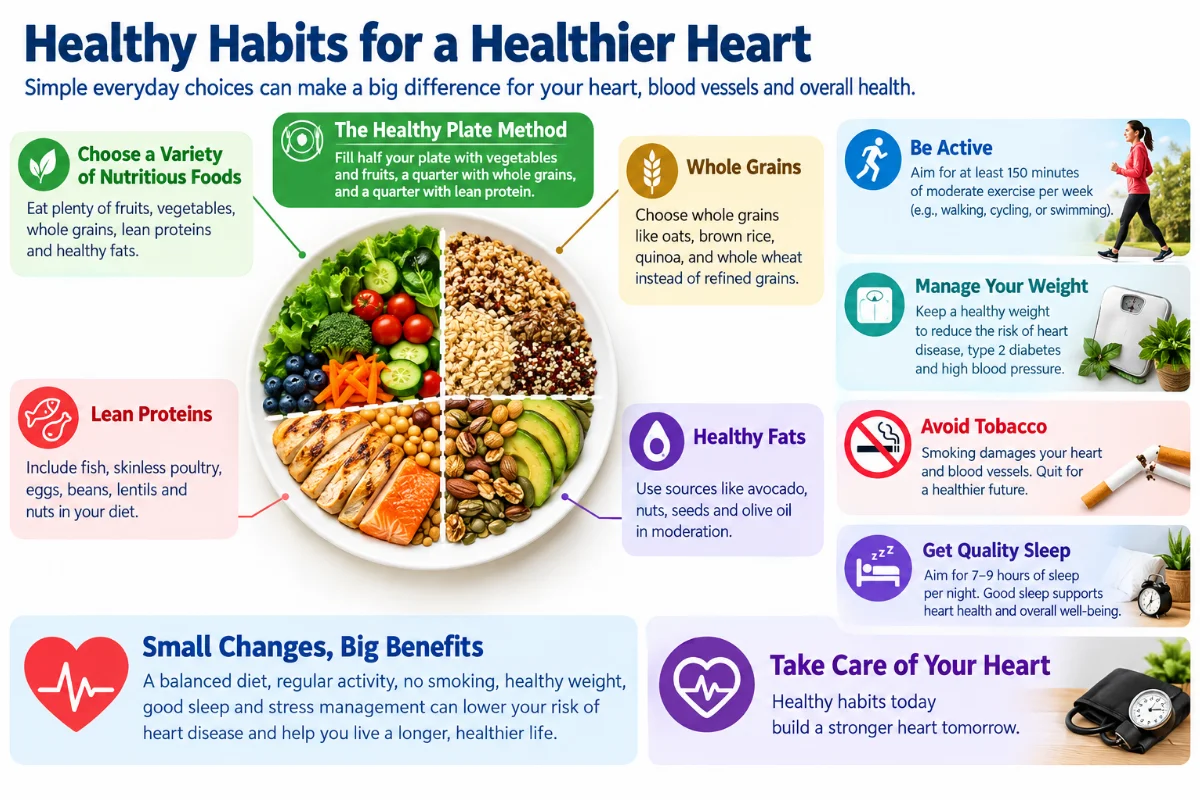
Treatment depends on your numbers, your overall health, and your cardiovascular risk, but for almost everyone, lifestyle changes are part of the plan.
1. Cut Sodium with an Actual Target
The WHO’s guidance is specific. Keep salt intake under 2 grams a day. That’s easier to exceed than most people expect, since most dietary sodium comes from packaged and restaurant food rather than the salt shaker on your table.
Practical steps:
- Lean toward fresh, minimally processed food
- Cut back on salty snacks and sauces
- Check sodium content on nutrition labels
- Season with herbs and spices instead of salt
- Be cautious with restaurant meals, which tend to run high in sodium
2. Follow a DASH Style Diet
Rather than a vague “eat balanced,” most clinicians point to something specific. The DASH diet (Dietary Approaches to Stop Hypertension). It centers on vegetables, fruit, whole grains, beans and legumes, nuts and seeds, and lean protein, while keeping saturated fat, trans fat, and added sugar low.
This isn’t meant to be a short-term “blood pressure diet” you drop after a month. Habits you can actually keep beat extreme restriction every time.
4. Move Regularly
The WHO recommends at least 150 minutes of moderate aerobic activity a week (or 75 minutes of vigorous activity), plus muscle-strengthening work on two or more days a week.
Walking, cycling, swimming, dancing, or whatever kind of movement you’ll actually stick with counts.
5. Keep Alcohol in Check
The WHO’s guidance here is no more than one drink a day for women and two for men.
6. Steer Clear of Tobacco
Tobacco damages blood vessels directly and raises cardiovascular risk across the board. Quitting is one of the highest-impact changes you can make.
7. Work Toward a Healthy Weight
If your weight sits above a healthy range for you, even modest weight loss can meaningfully lower blood pressure. As with diet, sustainable changes beat crash approaches.
8. Manage Stress
Chronic stress makes every other healthy habit harder to keep up, and it may affect cardiovascular risk directly. Useful tools include regular activity, enough sleep, relaxation practices, time outdoors, social connection, and talking to a professional when stress feels unmanageable on your own.
Stress management supports medical treatment, it isn’t a substitute for it when treatment is genuinely needed.
Medication for High Blood Pressure
Lifestyle changes matter, but some people need medication too, and that’s not a personal failing. It’s simply how the condition works for a lot of people.
Common medication classes include:
- ACE inhibitors
- Angiotensin receptor blockers
- Calcium-channel blockers
- Diuretics
Your Target Depends on Your Health Profile
Your blood pressure goal isn’t identical to everyone else’s.
- Under 130/80 mmHg is the target if you have cardiovascular disease, diabetes, chronic kidney disease, or a high overall cardiovascular risk.
- Under 140/90 mmHg is the general target for most other adults.
Your doctor sets your specific number based on your individual risk profile, not a one-size-fits-all chart.
Don’t Change Your Medication on Your Own
- Take it exactly as prescribed.
- Don’t stop it just because you feel fine; feeling fine is often a sign it’s working.
- Don’t share your prescription with anyone else.
- Report side effects to your doctor instead of quietly discontinuing.
- Keep your follow-up appointments.
What Happens If It Goes Untreated?
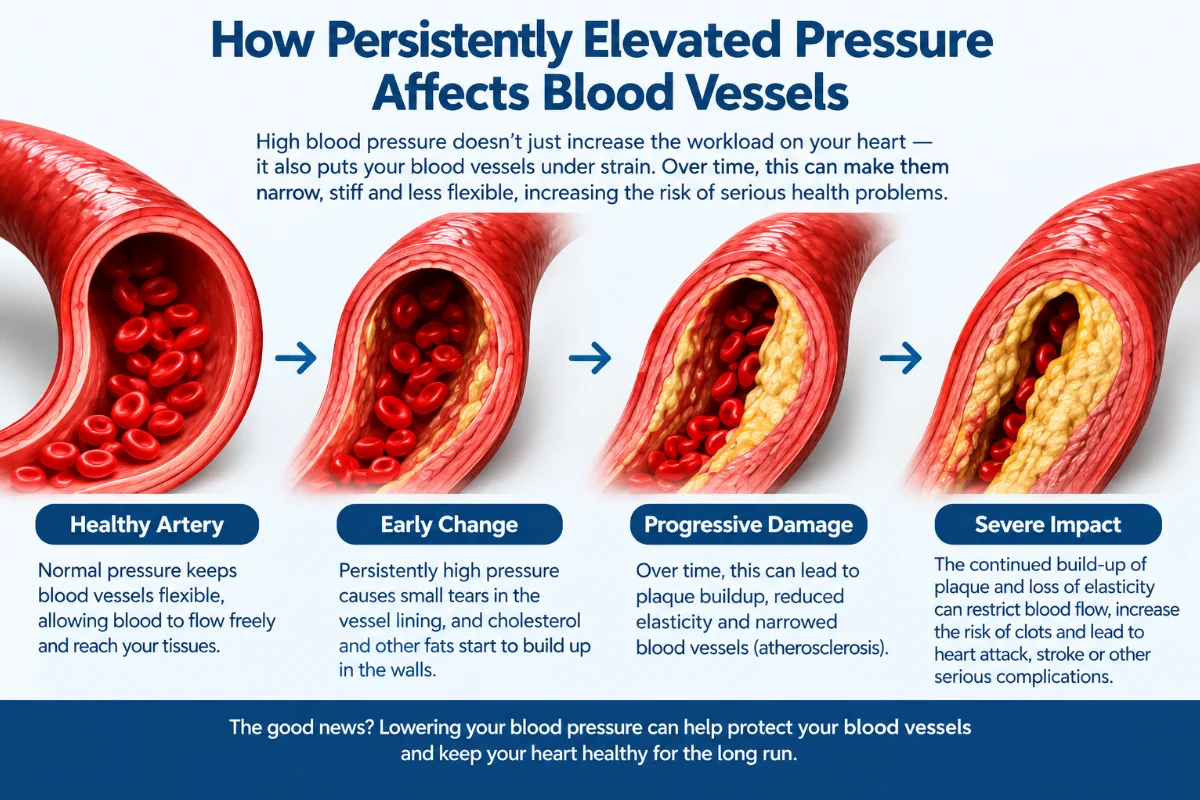
Persistently uncontrolled hypertension wears down blood vessels and organs over time.
- Heart: Coronary artery disease, heart attack, heart failure, or a heart that’s enlarged and strained from overwork.
- Brain: Higher stroke risk, since hypertension damages the arteries feeding the brain.
- Kidneys: Packed with small blood vessels, kidneys are especially vulnerable to long-term pressure damage, a path toward chronic kidney disease.
- Eyes: Blood vessel damage can affect vision as well.
This is exactly why catching it early and staying on top of it matters so much.
Can High Blood Pressure Be Prevented?
Not every case is preventable; genetics and other factors outside your control play a role. But plenty of risk factors can be changed.
A practical checklist:
- Check your blood pressure regularly
- Follow a DASH-style, balanced diet
- Keep salt intake under 2 grams a day
- Stay physically active
- Avoid tobacco
- Limit alcohol to the recommended amounts
- Maintain a healthy weight
- Manage other health conditions
- Follow your prescribed treatment
- Keep your medical appointments
1. High Blood Pressure in Children and Teens
This isn’t strictly an adult condition; kids and teens can develop hypertension too, though it’s evaluated differently. Family history, kidney conditions, hormonal issues, sleep apnea, and diet or lifestyle factors help in evaluation. Because the criteria are age-dependent, a child or teen with repeatedly high readings needs evaluation, adult thresholds simply don’t apply the same way.
2. High Blood Pressure During Pregnancy
Pregnancy calls for extra vigilance, since elevated blood pressure can affect both the pregnant person and the pregnancy itself.
Anyone who’s pregnant and develops a severe headache, vision changes, chest pain, significant swelling, or shortness of breath should get evaluated promptly.
Pregnancy-related hypertension needs to be managed by a qualified healthcare professional; this isn’t something to handle on your own.
When Is High Blood Pressure a Medical Emergency?
A reading above 180/120 mmHg signals possible severe hypertension.
If a repeat measurement stays that high, seek medical advice right away. And if it comes with any of the following, treat it as a hypertensive emergency and get care immediately. The American Heart Association identifies this exact combination as one:
- Chest pain
- Shortness of breath
- Weakness or numbness
- Difficulty speaking
- Vision changes
- Severe headache
- Confusion
Frequently Asked Questions
Q1: Why is high blood pressure calling the “silent killer”?
Because it usually causes no noticeable symptoms while it quietly damages blood vessels and organs. A lot of people only learn they have it during an unrelated checkup or after a heart attack or stroke has already happened.
Q2: Is high blood pressure dangerous?
It can be. Left untreated or poorly managed, it raises your risk of heart disease, stroke, kidney disease, and other serious complications.
Q3: Can you have high blood pressure without any symptoms?
That’s the norm, not the exception. Regular measurement is the only reliable way to catch it.
Q4: Is 140/90 considered high blood pressure?
Under the WHO’s adult definition, yes, 140/90 mmHg or higher, confirmed on two separate days, meets the threshold for hypertension. Other bodies, including the American Heart Association, use lower cutoffs for the categories.
Q5: Can lifestyle changes actually lower blood pressure?
Yes. Cutting sodium, following a DASH-style diet, staying active, avoiding tobacco, limiting alcohol, and managing weight can meaningfully lower blood pressure. Some people will still need medication on top of those changes.
Q6: Does high blood pressure ever go away for good?
For some people, lifestyle changes and treatment bring real, lasting improvement. But hypertension is generally something you keep monitoring long-term, not a condition you cure once and forget about.
Q7: What’s the fastest way to lower blood pressure?
There isn’t a safe instant fix. If a reading comes back unexpectedly high, sit quietly and remeasure correctly before assuming the worst. A very high reading, especially paired with concerning symptoms, calls for medical attention, not a home remedy.
Q8: Can young people get high blood pressure?
Yes. Children and teens can develop it, but their readings need to be interpreted against age-appropriate criteria rather than adult charts.
Q9: What’s white-coat hypertension?
It’s when blood pressure spikes specifically during a medical visit, even though it runs normal the rest of the time. It’s one reason doctors like to see home readings alongside office ones before making a diagnosis.
Key Takeaways
- High blood pressure is often called the “silent killer” because it usually has no symptoms; measuring it is the only reliable way to catch it.
- A reading has two numbers: systolic (top) and diastolic (bottom).
- Different organizations use slightly different thresholds. The WHO’s diagnostic line is 140/90 mmHg on two separate days.
- One high reading isn’t a diagnosis on its own; it could be whitecoat hypertension.
- Persistent hypertension can damage the heart, brain, kidneys, and blood vessels.
- Treatment goals vary by person: under 130/80 mmHg for those with cardiovascular disease, diabetes, or chronic kidney disease; under 140/90 mmHg for most others.
- Some people need medication alongside lifestyle changes. Never stop or change it without medical advice.
- A reading above 180/120 mmHg with serious symptoms is a medical emergency
The Bottom Line
High blood pressure is common, usually silent, and genuinely serious. It’s also one of the most manageable cardiovascular risks once you actually know your numbers.
The practical approach:
Check your blood pressure, get repeated elevated readings properly evaluated, build habits you can sustain, and follow medical advice when treatment is recommended.
The goal was never just a better number on a cuff it’s protecting your heart, brain, kidneys, and blood vessels for a long, healthy life.
Please Read More Related Articles:
