Aging Doesn’t Mean Life Stops. I Met 65-Year-Old Robert a few days ago and that changed the whole outlook of life for me.
At 65, Robert stopped worrying about looking young. Instead, he started thinking about something much more valuable, guess what?
Feeling alive…
Robert and his wife went on a vacation that they had been planning for years. They spent their days exploring new places, trying local food, taking photographs and walking until their feet were tired.
“Maybe this is what getting older is really about,” he told his wife. “Having the time to enjoy the things we were always too busy for.”
Robert wakes up looking forward to another day rather than wishing he could turn the clock backward.
His hair is gray. His face has lines that weren’t there decades ago. His body has changed. But his efforts for a healthy aging have led him towards “Feeling alive”.
And perhaps that’s the real essence of Healthy aging.
Getting older doesn’t have to mean giving up the experiences that make life meaningful. The goal isn’t necessarily to look 25 again. It’s to reach 65, 70, 80 and beyond with enough health, strength, energy and independence to continue doing the things you love.
Aging is inevitable. Science cannot promise to turn back the clock. But research shows that many everyday choices can influence how well we age—from staying physically active and eating a nutritious diet to proper sleep, maintaining social connections and keeping up with preventive healthcare.
So perhaps the better question isn’t, “How can I stop aging?”
It’s:
“How can I make the years ahead some of the best years of my life.
Healthy aging isn’t about looking 25 again. It’s about still carrying your own shopping at 70, taking the stairs without stopping to catch your breath, remembering your grandchildren’s birthdays and leaving the house whenever you feel like it. Genes play a part, but they’re far from the whole story. Movement, food, sleep, tobacco, alcohol, stress, friendships all shape how you age.
This guide covers what Healthy aging means, why our bodies change over time, and ten habits backed by guidance from the World Health Organization (WHO), the National Institute on Aging (NIA) and the US Centers for Disease Control and Prevention (CDC). It also covers the parts many articles skip: muscle, bones, balance, hearing and vision.
No routine has been proven to reverse biological aging, and products that promise it deserve suspicion. What you can do is lower your risk of chronic disease, taking good care of your body and mind, and extend the number of years you spend in good health.
What Is Healthy Aging
WHO defines healthy aging as developing and keeping the functional ability that lets people enjoy well-being in older age? Healthy aging doesn’t mean being free of health conditions. Plenty of people with well-managed arthritis or high blood pressure live full, independent lives.
Lifespan vs. Health span: What’s the Difference?
| Term | Meaning |
| Lifespan | How long you live |
| Health span | How long you stay in good health, with your function and independence intact |
Researchers now put more weight on health span, because extra years matter, when you can enjoy them.
Why Do We Age?
Aging happens as damage builds up in cells and tissues and the body’s repair systems slow down. Genes, lifestyle and environment all influence how quickly that happens. No single cause explains it.
1. Genes
Genes affect aging and disease risk. Studies suggest they account for only a modest share, everything else, from what you eat to whether you smoke, carries real weight.
2. What happens inside your cells?
Over the years, cells collect damage to their DNA and proteins. Some cells turn senescent, which means they stop dividing but stay active and release inflammatory signals. Stem cells also get worse at replacing worn out tissue. Put together, your body repairs itself less well than it once did.
3. Inflammation and oxidative stress
Normal metabolism produces molecules that can damage cells, and your body has systems to keep them in check. Long-term, low-grade inflammation, is linked with heart disease, type 2 diabetes and dementia.
4. Hormones and metabolism
Hormone levels, insulin sensitivity and metabolic rate shift through adulthood. Some of that is normal. Some reflects medical conditions. Muscle also declines gradually from midlife, which is one reason strength training matters so much.
5. Environment
Ultraviolet (UV) rays, tobacco smoke and air pollution all leave a mark over time. UV exposure drives most visible skin aging and raises skin cancer risk. Air pollution is linked with heart, lung and brain health.
6. Daily habits and living conditions
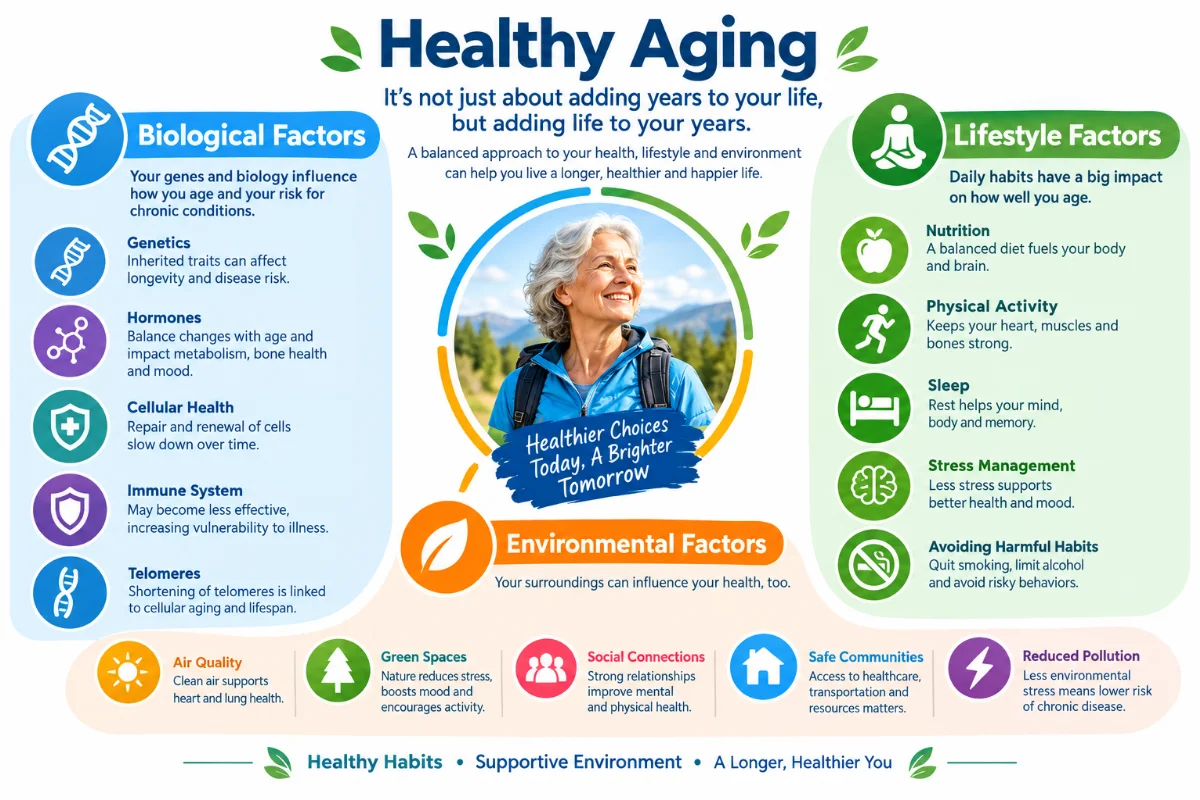
Inactivity, a poor diet, smoking, heavy drinking, too little sleep, constant stress and loneliness all raise risk.
7. Can You Reverse Aging?
No. There’s no proven way to reverse normal human aging, and no lifestyle routine has been shown to take a guaranteed number of years off your biological age.
What you can do is prevent, delay or improve many age-related declines. Getting stronger with resistance training isn’t turning back the clock, but it’s a real gain in physical capacity. Better sleep won’t make you younger overnight, but it helps your body and brain work properly.
So, the more useful question is this: how can you stay healthy, strong and independent for as many years as possible?
10 Ways to Support Healthy Aging
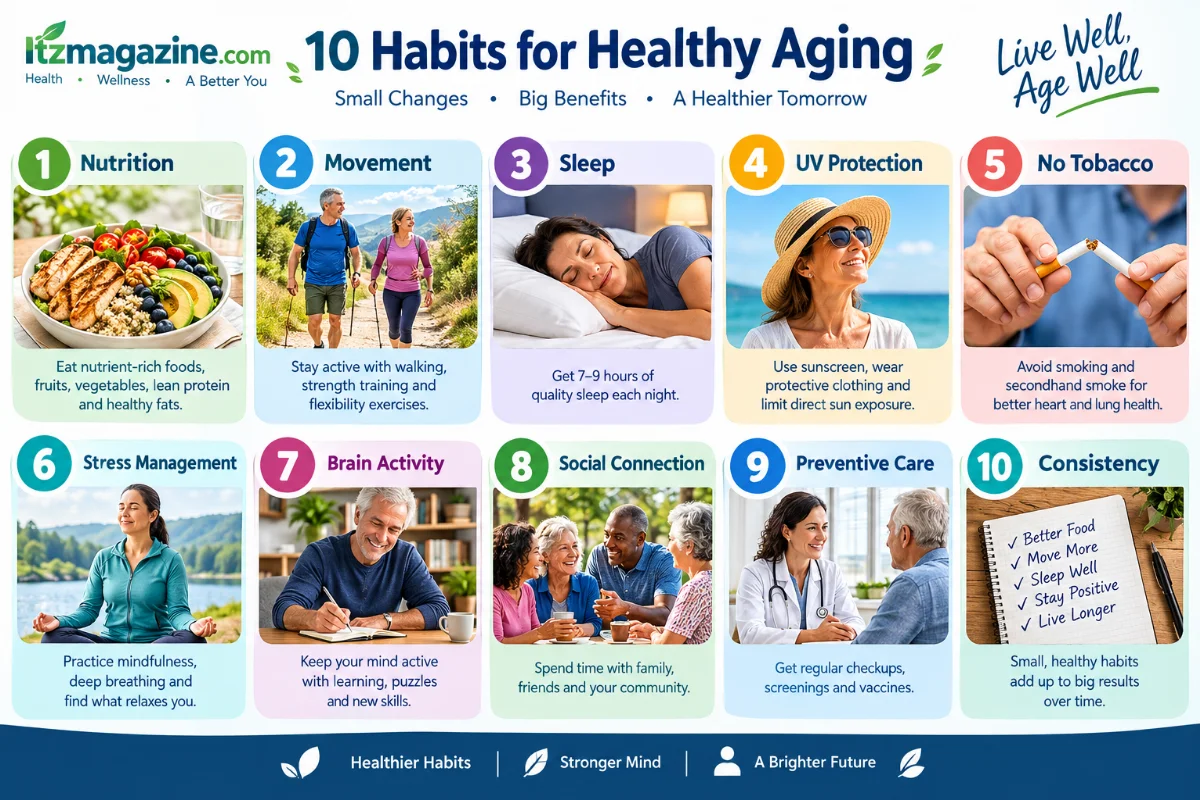
1. Eat a balanced, nutrient-rich diet
A healthy aging diet centers on a wide variety of minimally processed foods: vegetables, fruit, whole grains, beans, nuts, seeds, fish, eggs or poultry, and unsaturated fats such as olive oil. WHO describes healthy eating in terms of variety, balance and moderation? Mediterranean-style eating is among the most studied patterns for long-term health, and cutting back on ultra-processed foods, added sugar and salt helps too.
Protein deserves special attention. The standard adult recommendation is about 0.8 grams per kilogram of body weight per day, but some expert groups suggest older adults may benefit from roughly 1.0 to 1.2 grams, spread across meals, particularly alongside strength training. If you have kidney disease or another condition, ask your doctor or a dietitian before increasing it.
A few other points matter more with age. Your sense of thirst can weaken, so drink regularly. Vitamin B12 absorption often drops, so ask your doctor about testing.
2. Move every day, and include strength and balance
Regular physical activity is one of the best-supported habits for healthy aging. It protects your heart, muscles, mood and independence. WHO’s guidelines for adults, older adults included, suggest:
- 150 to 300 minutes of moderate aerobic activity a week, or 75 to 150 minutes of vigorous activity, or an equivalent mix
- Muscle-strengthening activities on at least 2 days a week
- For adults 65 and older, varied activity that emphasizes balance and functional strength on 3 or more days a week
Moderate activity includes brisk walking, cycling and dancing. Strength work can be weights, resistance bands, bodyweight exercises or heavy gardening. Tai chi and yoga help with balance.
3. Protect your sleep
Sleep is when your body and brain do their maintenance work, and poor sleep affects mood, concentration, energy and long-term health. Most adults need at least seven hours a night, and many older adults do well on seven to eight.
Habits that help include a regular bedtime and wake time, morning daylight, a dark, cool and quiet bedroom, less caffeine late in the day, and putting screens away before bed. If you snore loudly, stop breathing during sleep or feel exhausted despite enough time in bed, see a doctor. Sleep apnea is common and treatable.
4. Avoid tobacco and limit alcohol
Smoking damages nearly every organ and is a leading cause of heart disease, lung disease and cancer. Quitting helps at any age, and it’s worth avoiding secondhand smoke too. WHO has stated that no level of alcohol use is completely free of risk, and the risks rise with the amount? If you drink, keep it low, and check whether alcohol is safe with any medicines you take.
5. Protect your skin from UV damage
Sun exposure causes most visible skin aging, including wrinkles and uneven pigmentation, and it raises skin cancer risk. Seek shade at midday, wear a hat and protective clothing, use broad-spectrum sunscreen of SPF 30 or higher, and skip tanning beds. Check your skin regularly, and see a doctor about any mole or spot that changes.
Genetics, smoking, sleep and diet all affect how skin ages as well. The goal is healthy skin, not permanent youth.
6. Manage stress and look after your mental health
Some stress is normal. The problem is stress that never lets up and starts to disrupt your sleep, relationships or daily life. Regular activity, time outdoors, breathing or relaxation exercises, hobbies, good company all help to ease away stress.
Depression and anxiety aren’t a normal part of aging. Ongoing low mood, loss of interests, hopelessness or constant worry deserve professional support. These conditions are common and treatable.
7. Keep your brain active and look after your hearing and vision
Learning a language, playing an instrument, reading, volunteering and picking up new skills keep your mind engaged, and they’re worth doing. But no single puzzle or brain-training app has been proven to prevent dementia.
The stronger evidence points elsewhere. The 2024 Lancet Commission on dementia identified 14 modifiable risk factors and estimated that addressing them could prevent or delay roughly 45% of dementia cases. The list includes untreated hearing loss and vision loss, high blood pressure, high LDL cholesterol, diabetes, obesity, physical inactivity, smoking, heavy drinking, depression, social isolation, air pollution and head injury. These are associations and estimates, not guarantees, but they show that hearing tests, blood pressure checks and regular exercise matter as much for your brain as crosswords do. Get your hearing and eyes tested regularly, and use hearing aids or glasses if you need them.
8. Stay socially connected
Loneliness and social isolation are linked with poorer physical and mental health, and WHO describes strong social connections as important for both. Call friends and family, join a hobby group or community class, volunteer, share regular meals, or mentor someone younger.
9. Keep up with preventive healthcare
Screening and prevention catch problems earlier, when they’re easier to treat. Depending on your age, sex, medical history and country, that could include:
- Blood pressure, blood sugar and cholesterol checks
- Recommended cancer screenings
- Bone density testing, which guidelines commonly recommend for women from around 65, and earlier or for men when risk factors exist
- Vaccinations, which may include influenza, COVID-19, pneumococcal, shingles, RSV and tetanus boosters
- Dental checkups and vision and hearing tests
- A regular medication review, especially if you take several medicines
Schedules differ by country and by person, so follow advice from a qualified healthcare professional rather than a generic checklist.
10. Build habits you can actually keep
A perfect routine that lasts two weeks does less for you than a simple one that lasts years. Pick one or two habits and stick with them for a month before adding more. Attach a new habit to an existing one, like a short walk after dinner. Make it social with a walking partner or a class. When you slip, restart without guilt. Consistency matters more than intensity.
Muscle, Bones and Balance: The Overlooked Side of Healthy Aging
Many Healthy Aging guides focus on diet and skin. For staying independent, muscle, bone and balance often matter more.
- Muscle. Muscle mass and strength decline gradually from midlife. Severe loss is called sarcopenia, and it raises the risk of falls and disability. Strength training at least twice a week, plus enough protein, is the best-supported defense. People in their 70s, 80s and beyond can still build strength.
- Bones. Bones thin with age, and osteoporosis can lead to fractures. Weight-bearing exercise, enough calcium and vitamin D, not smoking and limited alcohol all help. Ask your doctor whether you need bone density testing.
- Balance. According to the CDC, roughly one in four adults aged 65 and older falls each year. Many of those falls are preventable. Do regular balance and strength exercises (tai chi is a good option), get your vision checked, ask a pharmacist or doctor to review medicines that cause dizziness, improve lighting at home, remove loose rugs and clutter, add grab bars and handrails, wear supportive shoes, and stand up slowly.
Do Anti-Aging Supplements Work?
Mostly, no. The internet is full of products promising to reverse aging, and the evidence doesn’t back them.
Supplements can be useful when you have a documented need, such as vitamin D or B12 for a deficiency. That’s a medical decision, not an anti-aging treatment.
What You Can and Can’t Control
| Harder to control | Easier to control |
| Genetics | Physical activity |
| Chronological age | Diet |
| Natural biological changes | Sleep |
| Family medical history | Tobacco and alcohol use |
| Some environmental exposures | Preventive healthcare |
| Some inherited conditions | Social connection |
| Stress management |
A Simple Healthy Aging Routine
In the morning, get some daylight, move your body and eat a balanced breakfast with some protein. During the day, eat a variety of foods, drink enough fluids, take walking breaks and spend time with other people. In the evening, wind down, limit screens and keep a regular bedtime.
Across the week, aim for 150 minutes of moderate activity, strength training on at least 2 days, some balance work such as tai chi or single-leg stands, time with friends, family or your community, and up-to-date checkups and screenings.
Common Healthy Aging Myths
- Getting older automatically means getting unhealthy. Not automatically. People of the same age vary widely in health and function, and healthy behaviors and supportive environments help people keep their abilities.
- You need expensive anti-aging products. You don’t. The strongest foundations are ordinary ones: nutritious food, movement, sleep, no tobacco, connection and appropriate healthcare.
- Aging is only about wrinkles. It affects the heart, muscles, bones, metabolism, senses and brain.
- It’s too late to start. Research shows people can improve strength, balance and fitness even when they begin in later life. Starting late still beats not starting.
- Dementia is a normal part of aging. Some slowing in memory speed is normal. Dementia is a disease, not an inevitable result of getting older.
Frequently Asked Questions About Healthy Aging
Q1: What is healthy aging?
Healthy aging is the process of developing and keeping the physical, mental and social abilities that let you live independently and well in older age. It’s about function and quality of life, not the absence of every health condition.
Q2: What are the main reasons human’s age?
Aging comes from several interacting processes: cellular damage, senescent cells, chronic inflammation, hormonal and metabolic change, environmental exposures and lifestyle.
Q3: Can humans reverse aging?
No proven method fully reverses normal human aging. Healthy habits can improve fitness, lower disease risk and extend health span.
Q4: What is the most important habit for healthy aging?
No single habit works alone. If you have to start with one, regular physical activity, including strength and balance work, has some of the strongest evidence.
Q5: Can exercise make you biologically younger?
Exercise improves fitness, strength, heart health and function. Calling that “reversing biological age” overstates the evidence, because biological age tests aren’t validated for individual use.
Q6: Is there an anti-aging diet?
No diet stops aging. A varied, mostly plant-based pattern such as the Mediterranean diet is a well-supported foundation for long-term health.
Q7: How much sleep do older adults need?
Most adults need at least seven hours a night, and many older adults do well on seven to eight. Ongoing sleep problems are worth discussing with a doctor.
Q8: Do relationships affect healthy aging?
Yes. Strong social connection is linked with better physical and mental health, while isolation and loneliness are linked with worse outcomes.
Q9: Is memory loss a normal part of aging?
Some slowing in recall is common. Memory loss that disrupts daily life isn’t normal and should be checked by a doctor.
Q10: Is it too late to start healthy aging habits?
No. People in their 70s, 80s and beyond can still build strength, improve balance and lower their health risks.
Key Takeaways
- Aging can’t be stopped, but healthy aging is achievable for many people.
- Healthy aging is about function, independence and quality of life, not looking younger.
- Genes matter, but lifestyle and environment strongly influence how you age.
- Aim for 150 minutes of moderate activity a week, strength training on 2 or more days, and regular balance work.
- Eat a varied, balanced diet with enough protein, and drink enough fluids.
- Prioritize sleep, avoid tobacco and limit alcohol.
- Protect your hearing, vision, skin, bones and balance.
- Stay connected to other people and keep your mind engaged.
- Use checkups, vaccinations and screenings to catch problem, Be skeptical of anti-aging supplements and expensive longevity protocols.
Conclusion
You can’t change your birthday or your genes. But according to research from the National Institute on Aging, genetics and lifestyle choices both influence healthy aging, while healthy habits can help people maintain their health, mobility, and quality of life as they age. Geriatricians and longevity researchers consistently point to the same evidence-backed pillars: eat well, move often, sleep properly, see your doctor regularly, keep your friendships alive, keep learning, and stay away from tobacco.
The data behind each habit is striking. Adults should aim for at least 150 minutes of moderate-intensity physical activity each week, according to the World Health Organization (WHO). Regular physical activity can help prevent and manage conditions such as heart disease, type 2 diabetes, and some cancers. Research published in PLOS Medicine also found that people with stronger social relationships had a 50% greater likelihood of survival across the studies analyzed, although this was an association rather than proof that social connections directly cause longer life. Meanwhile, regular health care and preventive screening can help identify conditions such as high blood pressure and type 2 diabetes, while getting enough quality sleep supports overall health. The CDC recommends at least 7 hours of sleep for adults aged 18–60, with different recommendations for older age groups.
None of this is a secret, and none of it requires drastic reinvention—just consistent, sustainable choices made over time, reinforced by decades of clinical research and public health data. The National Institute on Aging specifically highlights healthy eating, physical activity, regular medical care, learning, and staying connected with family and friends as important parts of healthy aging.
Life after retirement, after fulfilling life’s duties, is meant to be a carefree, well-earned chapter. But that freedom is only fully enjoyable when it’s paired with healthy aging, because energy, mobility, and mental clarity are what actually let you savor the time you’ve earned. Investing in these habits now is investing in your ability to enjoy tomorrow.
Sources and Further Reading
- World Health Organization, Ageing and health: https://www.who.int/news-room/fact-sheets/detail/ageing-and-health
- World Health Organization, Physical activity: https://www.who.int/news-room/fact-sheets/detail/physical-activity
- World Health Organization, Healthy diet: https://www.who.int/news-room/fact-sheets/detail/healthy-diet
- World Health Organization, Social isolation and loneliness: https://www.who.int/teams/social-determinants-of-health/demographic-change-and-healthy-ageing/social-isolation-and-loneliness
- National Institute on Aging, Healthy aging: https://www.nia.nih.gov/health/healthy-aging
- National Institute on Aging, participating in activities you enjoy as you age: https://www.nia.nih.gov/health/participating-activities-you-enjoy
- CDC, Healthy aging: https://www.cdc.gov/healthy-aging/about/index.html
- CDC, Older adult falls: https://www.cdc.gov/falls/index.html
- Harvard Health, Lifespan vs. health span: https://www.health.harvard.edu/healthy-aging-and-longevity/lifespan-vs-healthspan-why-how-you-age-matters-more-than-how-long-you-live
- The Lancet Commission on dementia prevention, intervention, and care (2024): https://www.thelancet.com/commissions/dementia-prevention-intervention-and-care
Please Read More Informative Articles:
Gut Health | The Free Guide to a Healthy Gut
10 Liver-friendly diets | Healthy Eating Patterns That Support Liver Health
Fatty Liver | What It Actually Means and What You Can Do About It